Notre Dame de Rouen. The façade of the Gothic Church in France. Photographer: Hippo1947. Licence: SHUTTERSTOCK.

20 October, 2015

God Bless The Little One.


A Four-Year-Old boy
scores a scintillating solo try
against the Queensland Legends.
Available on YouTube at

19 October, 2015

KAPOW !!! Take That All You Cunning People Trying To Undermine Christ And His Church !!!


This Article is taken from Fr John Zuhlsdorf's Blog, FR. Z's BLOG


Illustration: PINTEREST


URGENT: Romanian Greek Catholic Doctor’s speech to Synod! Members (all) get a serious talking to!

I saw this at Voice of the Family.  You can find it other places too.
The entire Synod of Bishops (and the fancy people running it) received a marvelously cold slap in the face with the wet towel of real “reality” in a speech by a lay woman from Romania.  She didn’t waste time or words, but laid right into them.
My emphases and comments:
The following intervention was made by Dr. Anca-Maria Cernea,  President of the Association of Catholic Doctors of Bucharest (Romania), at the Ordinary Synod on the Family on Friday.
Your Holiness, Synod Fathers, Brothers and Sisters, I represent the Association of Catholic Doctors from Bucharest.
I am from the Romanian Greek Catholic Church.
My father was a Christian political leader, who was imprisoned by the communists for 17 years. My parents were engaged to marry, but their wedding took place 17 years later.


My mother waited all those years for my father, although she didn’t even know if he was still alive. They have been heroically faithful to God and to their engagement.
Their example shows that God’s grace can overcome terrible social circumstances and material poverty.
We, as Catholic doctors, defending life and family, [that is, actually doingsomething] can see this is, first of all, a spiritual battle.
Material poverty and consumerism are not the primary cause of the family crisis. [BAM!]
The primary cause of the sexual and cultural revolution is ideological.  [BIF!]
Our Lady of Fatima has said that Russia’s errors would spread all over the world. [Do I hear an “Amen!”?]


It was first done under a violent form, classical Marxism, by killing tens of millions.
Now it’s being done mostly by cultural Marxism. There is continuity from Lenin’s sex revolution, through Gramsci and the Frankfurt school, to the current-day gay-rights and gender ideology[Naming names, too!]
Classical Marxism pretended to redesign society, through violent take-over of property.
Now the revolution goes deeper; it pretends to redefine family, sex identity and human nature.
This ideology calls itself progressive. But it is nothing else than the ancient serpent’s offer, for man to take control, to replace God, to arrange salvation here, in this world.
It’s an error of religious nature, it’s Gnosticism[KA-POW!]


It’s the task of the shepherds to recognize it, and warn the flock against this danger.[OORAH!  Is that what the Synod Fathers are doing?  I’m just asking.]
“Seek ye therefore first the Kingdom of God, and His justice, and all these things shall be added unto you.”
The Church’s mission is to save souls. Evil, in this world, comes from sin. Not from income disparity or “climate change”[Do I hear an “Amen!”?]
The solution is: Evangelization. Conversion.
Not an ever increasing government control. Not a world government. These are nowadays the main agents imposing cultural Marxism to our nations, under the form of population control, reproductive health, gay rights, gender education, and so on.
What the world needs nowadays is not limitation of freedom, but real freedom, liberation from sin. Salvation.


Our Church was suppressed by the soviet occupation. But none of our 12 bishops betrayed their communion with the Holy Father. Our Church survived thanks to our bishops’ determination and example in resisting prisons and terror.  [I guess they were culture warriors.]
Our bishops asked the community not to follow the world. Not to cooperate with the communists.  [Can we hand the Synod over to this gal?  Please?]
Now we need Rome to tell the world: “Repent of your sins and turn to God for the Kingdom of Heaven is near”. [Is this what you are hearing from your pastors these days?  Or are you getting a bunch of half-mumbled, mealy-mouthed temporizing?]
Not only us, the Catholic laity, but also many Christian Orthodox are anxiously praying for this Synod. Because, as they say, if the Catholic Church gives in to the spirit of this world, it is going to be very difficult for all the other Christians to resist it.  [THWACK!]


Forward this to everyone.
God bless Dr. Cernea!
I have an imagine of some of the bishops, especially those from a certain country, blinking faster and faster as the speech goes on and, perhaps, pawing the ground with one of their feet while their hands work, aimlessly.


Have You Been To Benediction, Recently ?


"O Salutaris Hostia".
Available on YouTube at


"O Salutaris Hostia"
and
"Tantum Ergo".
Available on YouTube at

"Adoremus in aeternum".
[At thirty minutes on this video.]
Available on YouTube at

"Sweet Sacrament Divine".
Available on YouTube at


The power of the Holy Eucharist


Anima Christi (Soul Of Christ). Thanksgiving After Holy Communion.


Text is taken from The Saint Andrew Daily Missal.


"Anima Christi".
By Fr. Marco Frisina.
Anima Cristi - Alma de Cristo
Oración compuesta por San Ignacio de Loyola
esta versión musical en latín dirigida por Fr. Marco Frisina.
Available on YouTube at


Anima Christi, sanctifica me.
Corpus Christi, salva me.
Sanguis Christi, inebria me.
Aqua lateris Christi, lava me.

Passio Christi, conforta me.
O bone Jesu, exaudi me.
Intra tua vulnera absconde me.
Ne permittas me separari a te.

Ab hoste maligno defende me.
In hora mortis meae voca me,
Et jube me venire ad te.
Ut cum Sanctis tuis laudem te.

In saecula saeculorum.

Amen.


Soul of Christ, Sanctify me.
Body of Christ, save me.
Blood of Christ, inebriate me.
Water from the Side of Christ, wash me.

Passion of Christ, strengthen me.
O good Jesu, hear me.
Within Thy Wounds, hide me.
Suffer me not to be separated from Thee.

From the malicious enemy, defend me.
In the hour of death, call me,
And bid me come unto Thee.
That with Thy Saints, I may praise Thee.

For ever and ever.

Amen.

An Indulgence of 300 days each time this Prayer is said.
An Indulgence of seven years, if said after Holy Communion.
If said every day during the month, a Plenary Indulgence,
subject to the usual conditions, on any day chosen.
(Blessed Pope Pius IX, 1854)

18 October, 2015

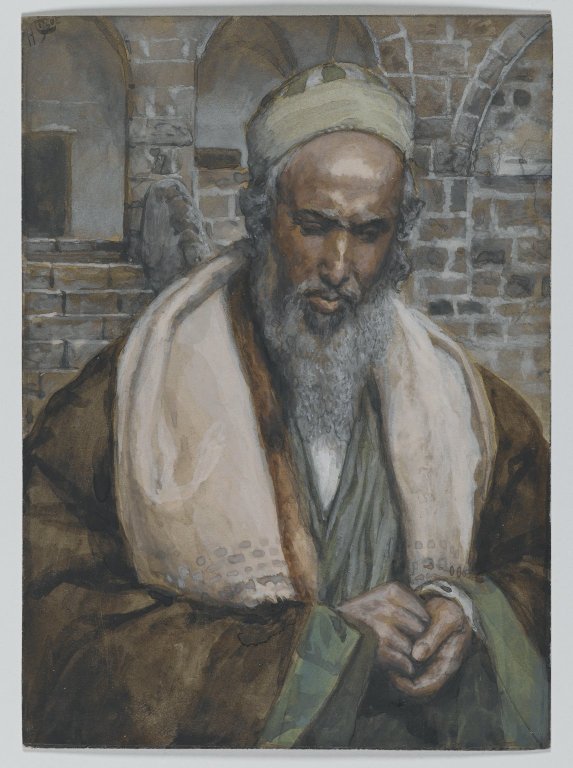
Saint Luke. Evangelist. Feast Day 18 October.


Text from The Saint Andrew Daily Missal,
unless otherwise stated.

Saint Luke.
Evangelist.
Feast Day 18 October.

Double of The Second-Class.

Red Vestments.

Saint Luke.
Evangelist.
Feast Day 18 October.


English: Saint Luke.
Français: Saint Luc.
Artist: James Tissot (1836–1902).
Date: 1886-1894.
Current location: Brooklyn Museum,
New York, United States of America.
Credit line: Purchased by public subscription.
Source/Photographer: Online Collection
of Brooklyn Museum; Photo: Brooklyn Museum,
2007, 00.159.207_PS2.jpg
(Wikimedia Commons)


Saint Luke, originally a pagan, was born, according to Eusebius, at Antioch, the Capital of the Kings of Syria. Saint Paul tells us that he exercised the profession of a physician. He accompanied Saint Paul (The Apostle of the Nations) on his travels, and was with him during most of his Missions and when he was twice a prisoner in Rome.


Owing to his connection with this Master and the other Apostles, he was enabled to write The Third Gospel, which Saint Jerome and Saint John Chrysostom describe as "The Gospel of Saint Paul".

Like The Doctor of The Gentiles (Saint Paul), he addresses himself to pagans to show them that Salvation is brought by Jesus to all men, without exception, who believe in Him. He is symbolically represented as an Ox, one of the four animals in the Vision of Ezechiel [Third Lesson of The First Nocturn at Matins], because, at the beginning of his Gospel, he mentions the Priesthood of Zacharias, and because the Ox was usually the victim in the sacrifices of The Old Law.

The Mass of Saint Luke, like that of Saint Mark, offers this particular, that its Gospel refers to the instructions given by The Saviour to His seventy-two Disciples, both these Evangelists (Luke and Mark) not having been Apostles, but only Disciples of Our Lord.

Saint Jerome relates that Saint Luke died in Achaia, Greece, at the age off eighty-four.

Mass: Mihi autem nimis.


THE SAINT ANDREW DAILY MISSAL


THE SAINT ANDREW DAILY MISSAL

Available (in U.K.) from

Available (in U.S.A.) from


"Adore Te Devote". Eucharistic Hymn Written By Saint Thomas Aquinas (1225 - 1274).


Adore Te Devote.
By Saint Thomas Aquinas.
Available on YouTube at

English: Saint Thomas Aquinas is girded by Angels
with a Mystical Belt of Purity after his proof of chastity.
Español: Tentación de Santo Tomás d'Aquino.
Artist: Diego Velázquez (1599-1660).
Date: 1632.
Current location: 
Museo del Palacio Arzobispal de Orihuela,
Alicante, Spain.
(Wikimedia Commons)


Another Hymn from the great Saint Thomas Aquinas.
This version does not include the 3rd or 4th Verses.

The Illustrations in the YouTube video are:

"The Temptation of Saint Thomas Aquinas" by Diego Velazquez;
"Triumph of Saint Thomas Aquinas over the Heretics" by Filippino Lippi;
"The Apotheosis of Thomas Aquinas" by Francisco de Zurbaran.


English: Saint Thomas Aquinas.
Altarpiece in the Church of Saint Dominic, Ascoli, Italy.
Deutsch: Altar von San Domenico in Ascoli,
Polyptychon, linke äußere Aufsatztafel: Hl. Thomas von Aquin.
Artist: Carlo Crivelli (1435-1495).
Date: 1476.
Current location: National Gallery, London, England.
Source/Photographer: The Yorck Project: 10.000 Meisterwerke der Malerei. DVD-ROM, 2002.
ISBN 3936122202. Distributed by DIRECTMEDIA Publishing GmbH.
(Wikimedia Commons)


Adoro te devote, latens Deitas,
Quæ sub his figuris vere latitas;
Tibi se cor meum totum subjicit,
Quia te contemplans totum deficit.

Visus, tactus, gustus in te fallitur,
Sed auditu solo tuto creditur.
Credo quidquid dixit Dei Filius;
Nil hoc verbo veritátis verius.

O memoriale mortis Domini!
Panis vivus, vitam præstans homini!
Præsta meæ menti de te vívere,
Et te illi semper dulce sapere.

Pie Pelicane, Jesu Domine,
Me immundum munda tuo sanguine:
Cujus una stilla salvum facere
Totum mundum quit ab omni scelere.

Jesu, quem velatum nunc aspicio,
Oro, fiat illud quod tam sitio:
Ut te revelata cernens facie,
Visu sim beátus tuæ gloriæ.

Amen


I devoutly adore you, O hidden God,
Truly hidden beneath these appearances.
My whole heart submits to you,
And in contemplating you,
It surrenders itself completely.

Sight, touch, taste are all deceived
In their judgment of you,
But hearing suffices firmly to believe.
I believe all that the Son of God has spoken;
There is nothing truer than this word of truth.

O memorial of our Lord's death!
Living bread that gives life to man,
Grant my soul to live on you,
And always to savor your sweetness.

Lord Jesus, Good Pelican,
wash me clean with your blood,
One drop of which can free
the entire world of all its sins.

Jesus, whom now I see hidden,
I ask you to fulfill what I so desire:
That on seeing you face to face,
I may be happy in seeing your glory.

Amen


The Gradual Of Eleanor Of Brittany (Graduel D'Alienor De Bretagne). Mass: Orbis Factor. Kyrie Eleison.


Text and Illustrations from Wikipedia - the free encyclopaedia,
unless otherwise stated.


English: Fontevraud Abbey, whose Liturgical Psalmody and Hymns were used
in the construction of the Gradual of Eleanor of Brittany
(Graduel D' Alienor De Bretagne). It was here, in 1290,
that Eleanor of Brittany took her Vows.
Français: Abbatiale de Fontevraud.
Photo: 14 May 2010.
Source: http://fr.wikipedia.org/w/index.php?title=Discussion_
Wikip%C3%A9dia:Journ%C3%A9es_
europ%C3%A9ennes_
du_patrimoine&diff=59199367&oldid=59197783.
Author: Aurore Defferriere.
(Wikimedia Commons)


Mediaeval Chant of
The Gradual of Eleanor of Brittany
(13th-14th-Century).
"Kyrie Eleison"
from the Mass "Orbis Factor".
Performers: Ensemble Organum.
Director: Marcel Peres.
Available on YouTube at


Detail of The Gradual of Eleanor of Brittany.
Illustration from The Mediaeval Collection of Selected Manuscript Paintings bulletin,
April 1972, The Metropolitan Museum of Art, New York, United States of America.
http://www.metmuseum.org/


The Gradual of Eleanor of Brittany (Français: Graduel D'Alienor De Bretagne) is an Illuminated Manuscript containing the Psalmody and Hymns of The Liturgical Year as used by The Religious Order of Fontevraud Abbey, near Chinon, in Anjou, France.

Fontevraud Abbey was Founded by the itinerant reforming Preacher, Robert of Arbrissel, who had just created a new Order, The Order of Fontevrault [Editor: Alternate name for Fontevraud.]. The first permanent structures were built between 1110 and 1119.

Eleanor of Brittany (1275 - 16 May 1342 ), daughter of John II of Brittany and Beatrice of England, was the sixteenth Abbess of the Double Fontevriste Priory at Amesbury, England. On her death, she bequeathed to Fontevraud Abbey The Gradual of Eleanor of Brittany. [Editor: Fontevriste is the adjectival name taken from Fontevraud.]


Amesbury Abbey, England,
site of the Double Fontevriste Priory,
where Eleanor of Brittany was Abbess from 1304-1342.
Photo: 5 July 2010.
Source: originally posted to Flickr as Amesbury Abbey.
Author: Matthew Black.
(Wikimedia Commons)


In 1281, aged 7 years old, she entered the Convent of Ambresburg (Amesbury), a Double Fontevriste Priory, which was Founded in 1177, close to Stonehenge, by Audeburge Hautes-Bruyeres, third Abbess of The Order of Fontevrault. (Buried in this Convent was another Eleanor of Brittany (1185-1241), a prisoner there until the death of her uncle, King John of England, and also of her cousin, King Henry III of England).

The Gradual had been given to Eleanor, the daughter of John II of Brittany, on her arrival at the Abbey of Fontevraud, in 1290 . There, she took her Vows. In 1304, she became the sixteenth Abbess of the Double Fontevriste Priory at Amesbury, England. She died on 16 May 1342, bequeathing her Gradual, which carried her Coat-of-Arms, to Fontevraud Abbey.

The Gradual was made in Paris in 1250, before Eleanor was born. It was possibly made in the studio of Nicolas Lombard, perhaps for Eleanor's parents, John II of Brittany and Beatrice of England (the second daughter of King Henry III of England). It would have been entrusted to their daughter in 1290, when she arrived at Fontevraud Abbey to take her Vows.

The Gradual is currently in the Public Library of Limoges, France. The Public cannot see it, but it is possible to browse online.

17 October, 2015

Saint Margaret Mary Alacoque. Virgin. Feast Day, Today, 17 October.


Text and Illustrations from Wikipedia - the free encyclopaedia,
unless otherwise stated.

Saint Margaret Mary Alacoque.
Virgin.
Feast Day 17 October.

Double.

White Vestments.


File:Merazhofen Pfarrkirche Chorgestühl links Margaretha Maria Alacoque.jpg

English: Saint Margaret Mary Alacoque.
Catholic Parish Church of Saint Gordian and Saint Epimachus,
Merazhofen, Germany. Sculptor: Peter Paul Metz, 1896.
Deutsch: Margaretha Maria Alacoque. Kath. Pfarrkirche St. Gordian und Epimachus, Merazhofen, Stadt Leutkirch im Allgäu, Landkreis Ravensburg. Chorgestühl, 1896, Bildhauer: Peter Paul Metz.
Polski: Małgorzata Maria Alacoque. Rzeźba z kościoła parafialnego pw. św. Gordona i Epimachusa w Merazhofen (Niemcy). Autor dzieła: Peter Paul Metz, 1896.
Photo: May 2009.
Source: Own work.
Author: Andreas Praefcke.
(Wikimedia Commons)


Saint Margaret Mary Alacoque, V.H.M. (French: Marguerite-Marie Alacoque) (1647-1690), was a French Roman Catholic Nun and Mystic, who promoted Devotion to The Sacred Heart of Jesus in its modern form. [Editor: The Order of The Visitation of Holy Mary (V.H.M.), or The Visitation Order, is a Roman Catholic Religious Order for Women. Members of The Order are also known as The Salesian Sisters, or, more commonly, as The Visitandines.]

Saint Margaret Mary Alacoque was born in 1647, in L'Hautecour, France, now part of the Commune of Verosvres, then in the Duchy of Burgundy, the only daughter of Claude Alacoque and Philiberte Lamyn, who had also several sons. From early childhood, Margaret was described as showing intense love for The Blessed Sacrament, and as preferring silence and Prayer to childhood play.

After her First Communion, at the age of nine, she practised, in secret, severe corporal mortification, until rheumatic fever confined her to bed for four years. At the end of this period, having made a Vow to The Blessed Virgin to Consecrate herself to Religious Life, she was instantly restored to perfect health. In recognition of this favour, she added the name "Mary" to her Baptismal name of "Margaret". According to her later account of her life, she had visions of Jesus Christ, which she thought were a normal part of human experience, and continued to practice austerity.


File:Paray le M apsidy zvenku DSCN1136.JPG

English: Apses of the Basilica of Paray-le-Monial, France.
Français: Paray-le-Monial, les apsides.
Photo: 17 August 2007.
Source: Own work.
Author: Jan Sokol.
(Wikimedia Commons)


Saint Margaret Mary Alacoque lost her father at a young age, and the family's assets were held by a relative, who refused to hand them over, plunging her family into poverty. During this time, her only consolation was frequent visits to Pray before The Blessed Sacrament in the local Church. When she was seventeen, however, the family regained their fortune and her mother encouraged her to go out into society, in the hopes of her finding a suitable husband. Out of obedience, and believing that her childhood Vow was no longer binding, she began to accompany her brothers in the social events of her society, attending Dances and Balls.

One night, however, she returned home, dressed in her finery, from a Ball for a Carnival, when she experienced a vision of Christ, scourged and bloody, in which He reproached her for her forgetfulness of Him, and of how His Heart was filled with love for her, due to her promise. As a result, she determined to fulfill her Vow, and entered, when almost twenty-four years of age, The Visitation Convent at Paray-le-Monial, on 25 May 1671, intending to become a Nun.

Saint Margaret Mary Alacoque was subjected to many trials to prove the genuineness of her vocation. She was "Admitted to Wearing The Religious Habit" on 25 August 1671, but was not allowed to make her "Religious Profession" on the same date of the following year, which would have been normal. Finally, she was admitted to "Profession" on 6 November 1672.


English: Painting of Jesus appearing to Saint Margaret Mary Alacoque.
The Church of San Michele, CortemiliaItaly.
Italiano: Cortemilia. Chiesa Parrocchiale di San Michele. Rodolfo Morgari:
Santa Margherita Maria Alacoque e la devozione al Sacro Cuore.
Photo: 6 June 2008.
Source: Own work.
(Wikimedia Commons)


In this Monastery, Saint Margaret Mary Alacoque received several private revelations of The Sacred Heart, the first on 27 December 1673, and the final one eighteen months later. The visions revealed to her the form of the Devotion, the chief features being reception of Holy Communion on The First Friday of each month, Eucharistic Adoration during a "Holy Hour" on Thursdays, and the Celebration of The Feast of The Sacred Heart. She stated that, in her vision, she was instructed to spend an hour every Thursday night to meditate on Jesus' Agony in The Garden of Gethsemane. The Holy Hour practice later became widespread among Catholics.

On 27 December 1673, The Feast of Saint John (Apostle and Evangelist), Saint Margaret Mary reported that Jesus permitted her to rest her head upon His Heart, and then disclosed to her The Wonders of His Love, telling her that He desired to make them known to all mankind and to diffuse The Treasures of His Goodness, and that He had chosen her for this work.

Initially, discouraged in her efforts to follow the instruction she had received in her visions, Saint Margaret Mary Alacoque was eventually able to convince her Superior, Mother de Saumaise, of the authenticity of her visions. She was unable, however, to convince a group of Theologians of the validity of her apparitions, nor was she any more successful with many of the Members of her own Community, and suffered greatly at their hands.


File:HerzJesu mit Droste zu Vischering und MMA.jpg

English: Painting of Blessed Mary of The Divine Heart, and
Saint Margaret Mary Alacoque, in Adoration of The Sacred Heart of Jesus.
Deutsch: Andachtsbild: Jesus offenbart sein Herz (Herz Jesu) der sel. 
Maria Droste zu Vischering und der hl. Margaretha Maria Alacoque.
Photo: 4 March 2008.
Source: Own work.
Author: Bremond.
(Wikimedia Commons)


She eventually received the support of Saint Claude de la Colombière, S.J., The Community's Confessor for a time, who declared that the visions were genuine. In 1683, opposition in The Community ended when Mother Melin was elected Superior and named Saint Margaret Mary as her Assistant. She later became Novice Mistress, and saw the Monastery observe The Feast of The Sacred Heart, privately, beginning in 1686. Two years later, a Chapel was built at the Basilica of Paray-le-Monial to honour The Sacred Heart. Saint Margaret Mary Alacoque died on 17 October 1690.

After Saint Margaret Mary Alacoque's death, the Devotion to The Sacred Heart was fostered by The Jesuits and was the subject of controversies within The Church. The practice was not officially recognised until seventy-five years later.

The discussion of Saint Margaret Mary Alacoque's own mission and qualities continued for years. All her actions, her revelations, her spiritual maxims, her teachings regarding the Devotion to The Sacred Heart, of which she was the chief exponent, as well as the Apostle, were subjected to the most severe and minute examination, and, finally, The Sacred Congregation of Rites passed a favourable vote on the Heroic Virtues of this "Servant of God".


File:St Margaret Mary Alacoque Contemplating the Sacred Heart of Jesus.png

English: Saint Margaret Mary Alacoque contemplating The Sacred Heart of Jesus.
Italiano: Santa Margherita Maria Alacoque contempla il Sacro Cuore di Gesù.
Polski: Św. Małgorzata Maria Alacoque adoruje Najświętsze Serce Jezusa.
Date: 1765.
Source: Lib-Art.com.
Author: Giaquito Corrado.
(Wikimedia Commons)


In March 1824, Pope Leo XII pronounced her Venerable and, on 18 September 1864, Blessed Pope Pius IX declared her Blessed. When her tomb was Canonically opened in July 1830, two instantaneous cures were recorded to have taken place. Her incorrupt body rests above the Side Altar in The Chapel of The Apparitions, located at The Visitation Monastery in Paray-le-Monial, and many striking Blessings have been claimed by Pilgrims attracted there from all parts of the World.

Saint Margaret Mary Alacoque was Canonised by Pope Benedict XV in 1920, and, in 1929, her Liturgical Commemoration was included in The General Roman Calendar for Celebration on the day of her death, 17 October.

In his 1928 Encyclical, Miserentissimus Redemptor, Pope Pius XI affirmed The Church's position, regarding the credibility of her visions of Jesus Christ, by speaking of Jesus as having "manifested Himself" to Saint Margaret Mary and having "promised her that all those who rendered this honour to His Heart would be endowed with an abundance of Heavenly Graces".


File:Die Vision des Herzens Jesu der Seligen Marguerite Marie Alacoque.jpg

The Vision of The Sacred Heart of Jesus
to Saint Margaret Mary Alacoque.
Artist: Antonio Ciseri (1821–1891).
Date: 1888.
Current location: Florenz, Chiesa del Sacro Cuore, Italy.
(Wikimedia Commons)


Saint Margaret Mary Alacoque's short Devotional Writing, La Devotion au Sacré-Coeur de Jesus (Devotion to The Sacred Heart of Jesus), was published posthumously by J. Croiset in 1698, and has been popular among Catholics.

"And He [Christ] showed me that it was His great desire of being loved by men, and of withdrawing them from the path of ruin, that made Him form the design of manifesting His Heart to men, with all the treasures of Love, of Mercy, of Grace, of Sanctification and Salvation, which it contains, in order that those who desire to render Him and procure Him all the honour and love possible, might themselves be abundantly enriched with those Divine Treasures, of which His Heart is the source." — from "Revelations of Our Lord to Saint Margaret Mary Alacoque".

In James Joyce's Short Story, "Eveline", part of his "Dubliners", a "coloured print of the promises made to Saint Margaret Mary Alacoque" is mentioned, as part of the decorations of an Irish home at the turn of the 20th-Century, testifying to Saint Margaret Mary's enduring popularity among Irish Catholics.


English: Stained-Glass Window in the Church of Our Lady of Vertus, Aubervilliers, France, depicting Saint Margaret Mary Alacoque seeing Our Lord's Sacred Heart.
Deutsch: Bleiglasfenster in der katholischen Pfarrkirche Notre-Dame-des-Vertus
Photo: 31 March 2011.
Source: Own work.
Author: GFreihalter.
(Wikimedia Commons)


The following Text is from The Saint Andrew Daily Missal.

Margaret Mary Alacoque was born at Vérosvres, in the Diocese of Autun, France, in 1647. While still young, she Consecrated herself to Jesus Christ by a Vow of perpetual Virginity. At the age of twenty-three, she entered the Convent of The Visitation Order at Paray-le-Monial.

The Mysteries of The Sacred Heart were revealed to her in three special manifestations, all unknown to her Community. Saint Margaret Mary spent the last years of her life in spreading this Devotion. She died on 17 October 1690, at the age of forty-three years. Her body was buried under a slab, close to the grille in the Nuns' Chapel, on the spot where she was kneeling when Our Lord appeared to her.

She was Beatified by Pope Pius IX, in 1864, and Canonised by Pope Benedict XV on The Feast of The Ascension 1920. Pope Pius XI extended her Feast to the whole Church on 28 June 1929.

In order to live in the spirit of The Liturgy (which is also the spirit of The Church), and Consecrate The First Friday Of The Month to The Sacred Heart (as The Church does by granting Indulgences), let us adapt this Devotion to the different Feasts of The Cycle. It will thus give a greater variety, both in its material object (The Sacred Heart of Jesus born at Christmas, dying on Good Friday, rising again at Easter), and in its formal object, the love of Jesus in His Joyful, Sorrowful, and Glorious Mysteries.

Mass: Sub umbra illíus.


THE SAINT ANDREW DAILY MISSAL


THE SAINT ANDREW DAILY MISSAL

Available (in U.K.) from

Available (in U.S.A.) from


Your Thanksgiving After Holy Communion. Offering Of All Masses In The World.


Text from The Saint Andrew Daily Missal.


The power of the Holy Eucharist

THANKSGIVING AFTER HOLY COMMUNION.

Offering Of All Masses In The World.

To be said, devoutly, after your Holy Communion.

"I unite myself with every Mass, which,
at this time, is being offered throughout the World.

"I place them in the hands of Mary, The Mediatrix Of All Graces,
that she may obtain,
by this Presentation of The Blood of Christ to The Most Holy Trinity,
the deliverance of Souls from Purgatory,
relief for the sick and the dying,
the conversion of infidels and sinners,
and the perseverance of all The Faithful."

Alma Redemptoris Mater (Loving Mother Of Our Saviour). Diego Ortiz. 16th-Century Maestro Di Capella, Chapel Royal Of Naples.


The Virgin of the Lilies
(La Vierge au lys).
Date: 1899.
Source: PaintingHere.com
Author: William-Adolphe Bouguereau (1825–1905).
(Wikimedia Commons)


Alma Redemptoris Mater,
by Diego Ortiz.
Performed by Cantar Lontano.
Director: Marco Mencoboni.
Available on YouTube at


The following Text is from Wikipedia - the free encyclopaedia.

Alma Redemptoris Mater (English: Loving Mother of Our Saviour) is a Marian Hymn,
written in Latin hexameter, and one of four Seasonal Liturgical Marian Antiphons
sung at the end of The Office of Compline (the other three Antiphons being
Ave Regina Cælorum, Regina Caeli and Salve Regina).

Hermannus Contractus (also called Herman the Cripple, 1013–1054) is said to have
composed the Hymn, based on the writings of Saints Fulgentius, Epiphanius and
Irenaeus of Lyon. Alma Redemptoris Mater is mentioned in "The Prioress's Tale",
one of Geoffrey Chaucer's Canterbury Tales. Formerly, it was recited at Compline only
from The First Sunday in Advent until The Feast of The Purification (2 February).

Diego Ortiz (1510 – 1570) was a Spanish composer and musicologist, in service to the
Spanish Viceroy of Naples, and, later, to King Philip II of Spain. Ortiz published influential
treatises on both instrumental and vocal performance.


Portrait of Diego Ortiz
from the Title Page of his
"Trattado de Glosas" (1553).
This File 19 June 2009.
User: Capmo.
(Wikimedia Commons)

Related Posts Plugin for WordPress, Blogger...