

Notre-Dame Cathedral and Paris in the
background of a 1452 – 1460 manuscript.
Artist: Jean Fouquet (1410–1478).
Title: Heures d’Étienne Chevalier.
Collection:
Source/Photographer:
(Wikimedia Commons)


unless stated otherwise.
Léonin (Leoninus, Leonius, Leo), active circa 1163–1190,[1] was the first known significant Composer of Polyphonic Organum.
He was probably French, probably lived and worked in Paris at Notre-Dame Cathedral, and was the earliest member of the Notre Dame School of Polyphony and the Ars Antiqua style who is known by name, thanks to the writer known as Anonymous IV.

Square notes in Pérotin’s “Salvatoris Hodie”.
“Novus Adam Natus Est”. From “Magnus Liber Organi”.
Date: 13th-Century.
This File is licensed under the
Share Alike 4.0 International Licence.
Author: Unknown.
(Wikimedia Commons)
Though no further identification is certain, the name “Leoninus” and its Latin diminutive “Leo” have the French equivalents Léonin/Léo.
“Viderunt Omnes”.
Leonin:
12th-Century French Composer.
Organum Duplum.
The Early Music Consort Of London.
David Munrow.
Available On YouTube
People say that Master Leoninus was the best Organista (Composer/Singer of Organum), and that he composed the great “Organum Book of Graduals and Antiphons” in order to expand the Divine Service.
The “Organum Book of Graduals and Antiphons” remained in use until the time of the great Composer, Perotin, [Editor: Late-12th-Century] who abridged it and composed Clausules and Sections that were many in number and better, because he was the best Discantor (Composer/Singer of Descant), and better than Leoninus. But this is not said for the subtlety of his Organum. [3]
The “Organum Book of Graduals and Antiphons” remained in use until the time of the great Composer, Perotin, [Editor: Late-12th-Century] who abridged it and composed Clausules and Sections that were many in number and better, because he was the best Discantor (Composer/Singer of Descant), and better than Leoninus. But this is not said for the subtlety of his Organum. [3]

Eugène Viollet-le-Duc’s reconstruction of the
Mediæval Choir of Notre Dame de Paris (1856).
16th-Century (1856) by Eugène Viollet-le-Duc (1814 - 1879).
(Wikimedia Commons)
Léonin may have been the first composer to use the Rhythmic Modes, and might have invented a notation for them.
According to W.G. Waite, writing in 1954: “It was Léonin’s incomparable achievement to introduce a rational system of Rhythm into Polyphonic music for the first time, and, equally important, to create a method of notation expressive of this Rhythm.”[4]
The “Magnus Liber” was intended for Liturgical use. According to Anonymous IV: “Magister Leoninus (Léonin) was the finest Composer of Organum; he wrote the great book (“Magnus Liber”) for the Gradual and Antiphoner for the Sacred Service.”
The “Magnus Liber” was intended for Liturgical use. According to Anonymous IV: “Magister Leoninus (Léonin) was the finest Composer of Organum; he wrote the great book (“Magnus Liber”) for the Gradual and Antiphoner for the Sacred Service.”
All of the “Magnus Liber” is for two voices, although little is known about actual performance practice: The two voices were not necessarily Soloists.
This could make Léonin’s use of meter even more significant.[5] Another possible suspect is Henricus Leonellus, who was at the Abbey of Saint Victor, circa 1163 - 1192.[6]
“Viderunt Omnes”.
Perotin:
12th-Century French Composer.
The Early Music Consort Of London.
David Munrow.
Available On YouTube
He is credited with developing the Polyphonic practices of his predecessor Léonin, with the introduction of three- and four-part harmonies.
Other than a brief mention by music theorist Johannes de Garlandia, in his “De Mensurabili Musica”, virtually all information on Pérotin’s life comes from Anonymous IV, a pseudonymous English student who probably studied in Paris.

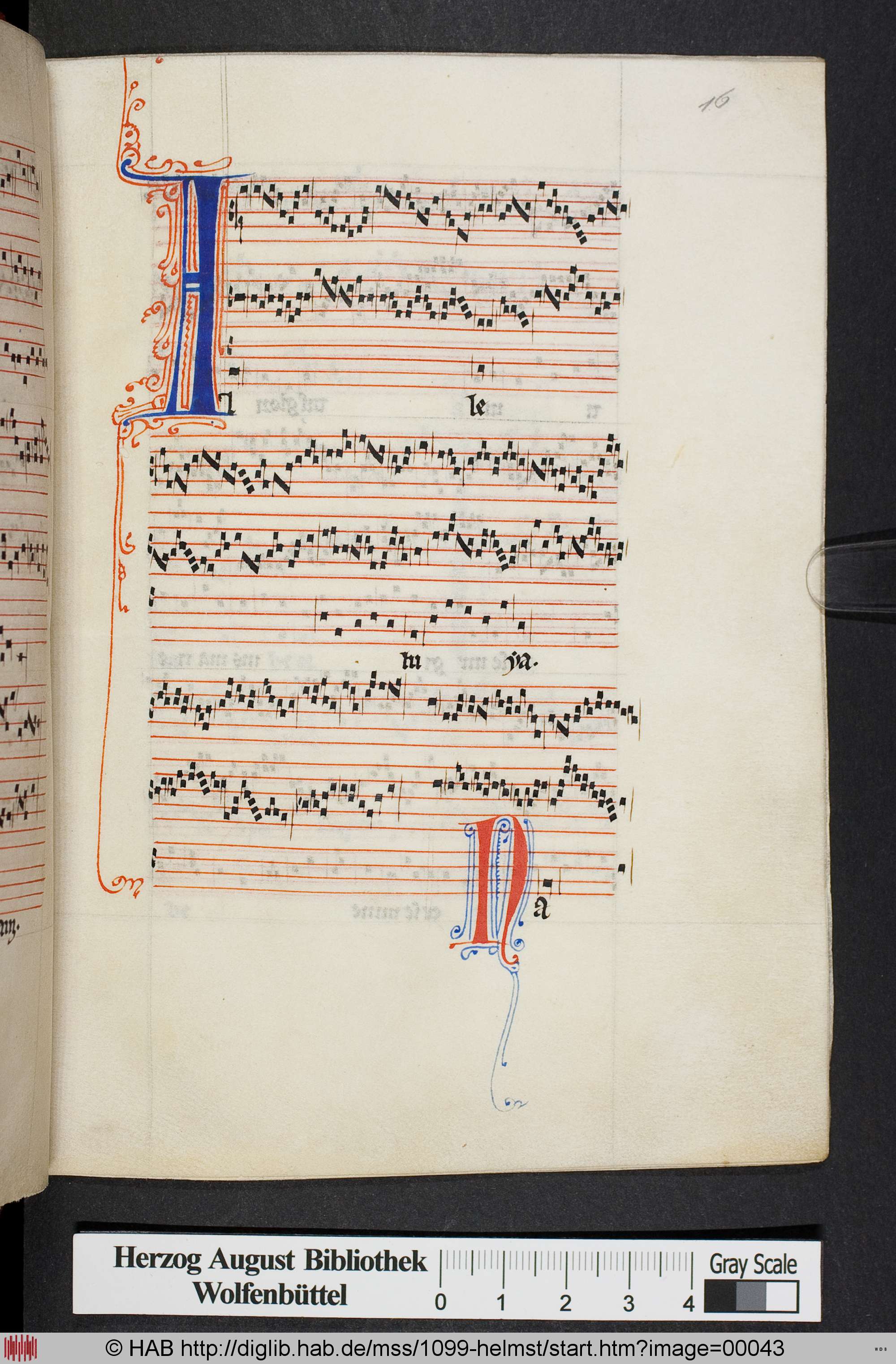
Perotin: “Alleluia Nativitas”
from Codex Guelf.
1099.
Date: 13th-Century.
Source:
Author: Unknown.
(Wikimedia Commons)
Anonymous IV names seven Titles from a “Magnus Liber” — including “Viderunt Omnes”, “Sederunt Principes” and “Alleluia Nativitas” — that have been identified with surviving works and gives him the title “Magister Perotinus” (“Pérotinus the Master”), meaning he was licensed to teach.
It is assumed that Perotinus was French and named Pérotin, a diminutive of Peter, but attempts to match him with persons in contemporary documents remain speculative.
The closest thing to a contemporary account of his life comes from two much later reporters: A brief mention attributed to the Music Theorist, Johannes de Garlandia[n 2] (circa 1270 – 1320) in his “De Mensurabili Musica”,[3][4][5] and four mentions[6] in the works of a Late-13th-Century English student known as Anonymous IV.
At one stage Anonymous IV was thought to be a pupil of Johannes de Garlandia, but this is unlikely,[4] and the name is a misnomer, derived from the title of notes by Charles-Edmond-Henri de Coussemaker, Anonymus IV.

No comments:
Post a Comment