Notre Dame de Rouen. The façade of the Gothic Church in France. Photographer: Hippo1947. Licence: SHUTTERSTOCK.

14 August, 2016

The Vigil Of The Assumption Of The Blessed Virgin Mary. 14 August.


English: The Assumption of The Virgin Mary.
Deutsch: Maria Himmelfahrt, Hochaltar für
St. Maria Gloriosa dei Frari in Venedig.
Français: L'Assomption de la Vierge.
Artist: Titian (1490–1576).
Date: 1516-1518.
Source/Photographer: The Yorck Project: 10.000 Meisterwerke der Malerei.
DVD-ROM, 2002. ISBN 3936122202.
Distributed by DIRECTMEDIA Publishing GmbH.
(Wikimedia Commons)


Text from The Saint Andrew Daily Missal,
unless otherwise stated.

The Vigil of The Assumption of The Blessed Virgin Mary.

14 August.

Violet Vestments.


The Epistle, for The Vigil Of The Assumption of The Blessed Virgin Mary, is "Ego quasi vitis",
(taken from The Book of Wisdom) from The Feast of Our Lady of Mount Carmel (16 July).

As the vine, I have brought forth a pleasant odour,
And my flowers are the fruit of honour and riches.

I am the mother of fair love,
And of fear,

And of knowledge,
And of Holy hope.

In me is all Grace of the way and of the truth,
In me is all hope of life and virtue.

Come over to me,
All ye that desire me,

And be filled with my fruits;
For my spirit is sweet above honey,

And my inheritance above honey and the honeycomb.
My memory is unto everlasting generations.

They that eat me, shall yet hunger;
And they that drink me, shall yet thirst.

He that hearkeneth to me shall not be confounded,
And they that work by me shall not sin.

They that explain me shall have life everlasting.


Christ, after having lain for only three days in the tomb, rose again and ascended into Heaven.

Likewise, the death of The Virgin resembled, rather, a short sleep. Hence, it was called "Dormitio" (Dormition), and before corruption could defile her body.

God restored her to life and Glorified her in Heaven.

These three privileges are celebrated by The Feast of The Assumption, which follows logically from the privilege of The Immaculate Conception and the privilege of The Mystery of The Incarnation.

For sin never having defiled the Soul of Mary, it was right that her body, in which The Word had become Incarnate, should not be tainted by the corruption of the tomb.


"Ask The Man Who Owns One". Car Museum Could Figure In Redevelopment Of Detroit’s Former Packard Plant.


1942 Packard
Super-Eight 160 Convertible.
Illustration: BOLDRIDE


This Text is from Wikipedia - the free encyclopaedia.

Packard was an American luxury automobile marque, built by The Packard Motor Car Company of Detroit, Michigan, United States, and, later, by The Studebaker-Packard Corporation of South Bend, Indiana.

The first Packard automobiles were produced in 1899, and the last in 1958, with one of the last concept cars built in 1956, the Packard Predictor.

For most of its history, Packard was guided by its President and General Manager, James Alvan Macauley, who also served as President of The National Automobile Manufacturers Association.

Inducted into The Automobile Hall of Fame, Macauley made Packard the number one designer and producer of luxury automobiles in The United States. The marque was also highly competitive abroad, with markets in sixty-one Countries. Gross income for the Company was $21,889,000 in 1928. Macauley was also responsible for the iconic Packard slogan, "Ask the Man Who Owns One".


1950 Packard Eight
Touring (Four-Door) Sedan Model 2301.
Photo: 30 September 2009.
Source: Own work.
Author: Cortcomp.
(Wikimedia Commons)


Photographed in Montreal, Quebec, Canada,
Photo: 24 November 2009.
Source: Own work.
Author: Bull-Doser.
(Wikimedia Commons)


Men Bet Their Lives on It.
Packard Merlin Engines.
Available on YouTube at


Portrait of a City.
Detroit.
1961.
Available on YouTube at


Detroit’s former Packard plant.
Photo: Mike Boening, taken on 9 December 2012.
Illustration: HEMMINGS DAILY


Text, by Daniel Strohl, from HEMMINGS DAILY

Along with art galleries, a nightclub, apartments, and a spa, the group behind the redevelopment of the former Packard plant in Detroit may also include a museum dedicated to Packard automobiles in their plans, though such a museum would likely not appear for many years.

As the Detroit Free Press noted in a recent article on the redevelopment project, Fernando Palazuelo, who bought the sprawling 40-acre complex at a foreclosure auction in December 2013 for $405,000, has outlined four phases to begin the project over the next several years. An Albert Kahn Associates-led $12 million restoration of the four-story administration building will constitute the first phase, while a recreational complex, art galleries and studio spaces, and a seven-story techno dance club will comprise phases two through four. A potential Packard auto museum could come about sometime after the fourth phase, itself tentatively scheduled for sometime after 2018.


Detroit's Packard Plant.
Available on YouTube at

13 August, 2016

"Dies Irae" (Day Of Wrath). The Sequence From The Requiem Mass For The Dead.


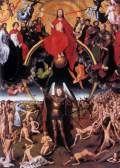
"Last Judgement Triptych" (Central Panel)
in Muzeum Narodowe, Gdansk, Poland.
Artist: Hans Memling (circa 1433–1494).
Date: Circa 1467-1471.
Source/Photographer: Web Gallery of Art:
(Wikimedia Commons)


"Dies Irae"
(Day of Wrath).
Available on YouTube at


Text is from Wikipedia - the free encyclopaedia,
unless otherwise stated.

"Dies Irae" (Day of Wrath) is a Latin Hymn attributed to either Thomas of Celano of The Franciscan Order (1200 – circa 1265) or to Latino Malabranca Orsini († 1294), Lector at The Dominican Studium at Santa Sabina, the forerunner of The Pontifical University of Saint Thomas Aquinas, Angelicum in Rome.

The Hymn dates from at least the 13th-Century, though it is possible that it is much older, with some sources ascribing its origin to Saint Gregory the Great († 604 A.D.), Saint Bernard of Clairvaux (1090-1153), or Saint Bonaventure (1221-1274).

It is a Mediaeval Latin poem characterised by its accentual stress and its rhymed lines. The metre is trochaic. The poem describes The Day of Judgement, The Last Trumpet summoning Souls before The Throne of God, where The Saved will be delivered and The Unsaved cast into Eternal Flames.

The Hymn is best-known from its use as a Sequence in The Roman Catholic Requiem Mass (Mass for The Dead or Funeral Mass). An English version is found in various Anglican Communion Service Books.

The melody is one of the most-quoted in musical literature, appearing in the works of many diverse composers.

Traditional Latin Mass At Saint Austin And Saint Gregory, Margate, Kent. Feast Of The Assumption. 1930 hrs. Monday, 15 August.


Illustration by 
FLICKR


MARGATE, KENT.

CHURCH OF SAINTS AUSTIN AND GREGORY.


The beautiful Puginesque Interior
of Saints Austin and Gregory,
38, Charlotte Place,
Margate, Kent CT9 1LP.
Telephone: 01843 220825,


Traditional Latin Mass.
On The Feast Of The Assumption.
1930 hrs. Monday, 15 August 2016.
Margate, Kent.

Traditional Latin Masses are also Celebrated
at the Church of Saints Austin and Gregory,
at 1130 hrs, every Sunday,
and 1930 hrs, every Monday,
and on Feast Days.

Traditional Latin Mass. On The Feast Of The Assumption. 1200 hrs. On Monday, 15 August, At Headcorn, Kent.


Illustration by 
FLICKR


HEADCORN, KENT.

CHURCH OF SAINT THOMAS OF CANTERBURY.


Photo © Copyright David Anstiss
and licensed for reuse

Traditional Latin Mass.
On The Feast Of The Assumption.
1200 hrs. Monday, 15 August.
Headcorn, Kent.

Traditional Latin Masses are also Celebrated
at the
Church of Saint Thomas of Canterbury,
Becket Court, 15, Station Road, Headcorn, Kent TN27 9SB,
(near to Headcorn Railway Station)

at 1200 hrs,

on the FOURTH SUNDAY OF EVERY MONTH

"This Will Be The Second Time That Mass Has Been Celebrated In This Mediaeval Church Since Pre-Reformation Times."


Saint Augustine's Church,
Snave, Ashford, Kent.
It is possible that a small private Chapel stood on this site before the present building was commenced in the Late-13th-Century. The East End is unusual in that The Lady Chapel
(more recently used as a school room) vies for importance with The Chancel.
Declared redundant in 1983, Saint Augustine's Church is now
entirely maintained by The Romney Marsh Historic Churches Trust.
Text: © 2014 Joan Campbell.
Photograph: © 2014 John Hendy.


Missa Cantata.
Saint Augustine's Church,
Snave, Ashford, Kent TN26 2QJ.

Saturday,
24 September 2016,
1200 hrs.

Celebrant:
Fr. Marcus Holden,
Rector of The Shrine of Saint Augustine,
Ramsgate, Kent.


Music:
The Victoria Consort.
Director:
Dominic Bevan.

Further Details:
Mrs. Marygold Turner
01580 291372.

Travel Directions to Saint Augustine's Church,
Snave (near Ashford), Kent TN26 2QJ.

By Road.
Leave the M20 at Junction 10.
Follow the A2070 towards Hastings.
After, approx, 9.3 miles, take the Slip Road to the LEFT
(signposted "SNAVE").
At the Post-Box (on your LEFT),
TURN LEFT, and you have arrived at the Church.
(N.B. Google Maps mark the destination as "Manor Farm")

By Rail.
Frequent Trains from Saint Pancras International Railway Station, London, going to ASHFORD INTERNATIONAL. Then take a Taxi to SNAVE.


Permission for this Mass at Saint Augustine's Church,
Snave, Ashford, Kent, has been kindly given by


From The Latin Mass Society.

Missa Cantata in Saint Augustine's,
Snave (near Ashford), Kent TN26 2QJ.
Saturday, 24 September 2016.
1200 hrs.

Snave is one a group of Mediaeval Churches built to serve very small communities
on Romney Marsh, in Kent. Now redundant, they are in the care of The Romney Marsh Historic Churches Trust, who have kindly given permission for us to Celebrate Mass on
Saturday, 24 September 2016 (Feast of Our Lady of Ransom) at 12 noon.

Last year (2015) was the first time Mass had been Celebrated in the Church since Reformation times. We are delighted to be able to return this year. The Celebrant will be Fr Marcus Holden (Rector of The Shrine of Saint Augustine, Ramsgate) and music will be supplied by The Victoria Consort.

12 August, 2016

Rood Screens. Chancel Screens. Rood Lofts. Vaulting. Stained-Glass. Consider The Liturgy. Discuss. Pray.


Rood Screen.
Lambader, Brittany, France.
Illustration: GOTHIC PAST


Lichfield Cathedral's
stunning 16th-Century Stained-Glass Windows.
Illustration: DAILY MAIL


18th-Century Iron Screen.
Saint Riquier Abbey,
Saint-Riquier, Somme,
Picardie, France.
Photo: 13 March 2011.
Source: Own work.
Author: Mattis.
(Wikimedia Commons)


English: The Rood Screen, Chapel Saint Fiacre,
Le Faouët, Brittany, France.
Français: Le Faouët (Bretagne, Morbihan) Chapelle Saint-Fiacre, Jubé.
Photo: 31 July 2009.
Source: Own work.
(Wikimedia Commons)


English: Chancel Screen, Sens Cathedral, France.
Français: Grilles du chœur de la cathédrale de Sens. Yonne, Bourgogne, France.
Photo: 17 September 2012.
Source: Own work.
Author: Pline.
(Wikimedia Commons)

ROOD LOFT. 

A Rood Loft is a Gallery, or Platform, atop a Rood Screen, used for The Rood (Crucifix)
and sometimes for musicians or singers. Most Rood Lofts, and indeed most Roods,
were destroyed during The Reformation. One very-well-known surviving Rood Loft
is in the superb little Church at Saint Margaret's, Herefordshire.


The Rood Loft,
Saint Margaret's Church, Herefordshire, England.


English: Vault over The Choir,
Soissons Cathedral
(Saint Gervasius and Saint Protasius)
France.
Photo: 6 February 2008.
Source: Own work.
Author: Mattana.
(Wikimedia Commons)

ALL THE ABOVE ILLUSTRATIONS (WITH THE EXCEPTION OF SOISSONS CATHEDRAL'S CHOIR VAULT, SAINT MARGARET'S ROOD LOFT, HEREFORDSHIRE, AND LICHFIELD CATHEDRAL'S STAINED-GLASS WINDOWS, WERE INCLUDED IN
"A TREATISE ON CHANCEL SCREENS
AND ROOD LOFTS. THEIR ANTIQUITY,
USE AND SYMBOLIC SIGNIFICATION"
BY AUGUSTUS WELBY PUGIN.
FIRST PUBLISHED IN 1851.
FACSIMILE EDITION AVAILABLE FROM

THE READER IS INVITED TO CONSIDER THE SANCTITY, PROFUNDITY,
AND HOLINESS, OF TODAY'S LITURGICAL PRACTICES, WITH THAT
OF AUGUSTUS WELBY PUGIN'S TIME.

11 August, 2016

"La Vie En Rose". Savon Á La Rose.


Antique French Soap Label.
Savon a la Rose.
Illustration: PINTEREST


"La Vie En Rose".
Edith Piaf.
Available on YouTube at

Saint Philomena. Virgin. Martyr. Feast Day, Today, 11 August.


Text and illustrations from Wikipedia - the free encyclopedia,
unless otherwise stated.


Statue of Saint Philomena,
Molve, Croatia.
Hrvatski: Kip sv. Filomene u Molvama,
neočekivano pronađen 2007.
Author: Fraxinus
(Wikimedia Commons)


Saint Philomena is, as believed by her devotees within The Catholic Church, a young Virgin and Martyr whose remains were discovered in 1802 in The Catacombs of Priscilla. Three tiles enclosing the tomb bore an inscription that was taken to indicate that her name was (in the Latin of the inscription) Filumena, the English form of which is Philomena.

The remains were removed to Mugnano del Cardinale, in Campania, Italy, in 1805 and became the focus of widespread devotion, with several Miracles credited to the Saint's intercession, including the healing of Venerable Pauline Jaricot in 1835, which received wide publicity. Saint John Vianney attributed to her intercession the extraordinary cures that others attributed to himself.

In 1833, a Neapolitan Nun reported that, in a vision, Saint Philomena had revealed that she was a Greek Princess, Martyred at thirteen years of age by Diocletian, who was Roman Emperor from 284 A.D. to 305 A.D.

From 1837 to 1961, Celebration of her Liturgical Feast was approved for some places, but was never included in The General Roman Calendar for Universal Use. The 1920 Typical Edition of The Roman Missal included a mention of her, under 11 August, in the Section headed Missae pro aliquibus locis (Masses For Some Places), with an indication that The Mass to be used in those places was one from The Common of a Virgin Martyr, without any Collect, Proper to the Saint.


Saint Philomena,
with attributes: Palm, Whip, Anchor, and Arrows.
Plaster Cast, by Johann Dominik Mahlknecht,
in The Museum Gherdëina in Urtijëi, Italy.
This File: 7 February 2009.
Source: Own work.
(Wikimedia Commons)


The Shrine of her Relics, in Mugnano del Cardinale, continues to be visited by Pilgrims from many Countries, an Arch-Confraternity in her honour exists, as does popular Devotion in various places around the World.

On 24 May 1802, in The Catacombs of Priscilla, on The Via Salaria Nova, an inscribed Loculus (space hollowed out of the rock) was found, and, on the following day, it was carefully examined and opened. The Loculus was closed, with three Terra Cotta tiles, on which was the following inscription: Lumena paxte cumfi.

It was, and is, generally accepted that the tiles were in the wrong order and that the inscription originally read, with the Left-most tile placed on the Right: Pax tecum Filumena ("Peace with you, Philomena").

Within the Loculus was found the skeleton of a female between thirteen and fifteen years old. Embedded in the cement was a small glass phial with vestiges of what was taken to be blood. In accordance with the assumptions of the time, the Remains were taken to be those of a Virgin Martyr named Philomena.


Saint Philomena.
Cathedral of Notre Dame,
Bayeux, France.
Date: 1839.
By Théodelinde Dubouché.
(Wikimedia Commons)


In 1805, Canon Francesco De Lucia requested Relics for a new Altar, and, on 8 June 1805, obtained the Remains, discovered in May 1802 (reduced to dust and fragments), for his Church in Mugnano del Cardinale, Italy, where they arrived on 11 August 1805, after being taken from Rome to Naples on 1 July.

In 1827, Pope Leo XII gave to the Church in Mugnano del Cardinale the three inscribed Terra Cotta tiles that had been taken from the tomb.

In his Relazione istorica della traslazione del sagro corpo di s. Filomena da Roma a Mugnano del Cardinale, written in 1833, Canon De Lucia recounted that wonders accompanied the arrival of the Relics in his Church, among them a statue that sweated some liquid continuously for three days.

The spread of Devotion to Saint Philomena, in France, as well as in Italy, was helped when Saint John Vianney built a Shrine in her honour and referred to her often, attributing to her the Miracles that others attributed to himself. Another help was the cure of the near-dying Venerable Pauline Jaricot, founder of The Society for The Propagation of The Faith, at Philomena's Shrine on 10 August 1835.


English: Saint Philomena.
Bamberg, Germany,
Deutsch: Obere Pfarrkirche Unsere Liebe Frau (Obere Pfarre)
Date: September 2008.
Source: Own work.
Author: AndreasPraefcke.
(Wikimedia Commons)


Another Miracle, accepted as Proved in the same year, was the multiplication of the bone dust of the Saint, which provided for hundreds of reliquaries without the original amount experiencing any decrease in quantity.

Devotion includes the wearing of the "Cord of Philomena", a Red-and-White Cord, which had a number of Indulgences attached to it, including a Plenary Indulgence on the day on which The Cord was worn for the first time,

There was, or is, also, The Chaplet of Saint Philomena, with Three White Beads in honour of The Blessed Trinity and Thirteen Red Beads in honour of the thirteen years of the Saint's life.

The Prayer suggestion for each is: “ Hail, O Holy Saint Philomena, whom I acknowledge, after Mary, as my advocate within The Divine Spouse, intercede for me now and at the hour of my death. ”

Devotionals are often given to young girls receiving their First Holy Communion or, on the thirteenth birthday, used primarily as a stepping-stone to practicing Devotionals such as The Holy Rosary.


English: Saint Philomena,
by Amaury-Duval (1808-1885).
Français: Sainte Philomène,
par Amaury-Duval (1808-1885).
Date: Circa 1844.
Source: Own work.
Author: Marc Baronnet.
Wikimedia Commons.


On 21 December 1833, The Holy Office declared that there was nothing contrary to The Catholic Faith in the revelations that Sister Maria Luisa di Gesù (1799–1875), a Dominican Tertiary, from Naples, claimed to have received from the Saint.

According to Sister Maria Luisa di Gesù, Saint Philomena told her she was the daughter of a King in Greece who, with his wife, had converted to Christianity. At the age of about thirteen, she took a Vow of Consecrated Virginity. When The Emperor Diocletian threatened to make War on her father, her father went with his family to Rome to ask for Peace.

The Emperor fell in love with the young Philomena and, when she refused to be his wife, subjected her to a series of torments; scourging, from whose effects two Angels cured her; drowning, with an anchor attached to her (two Angels cut the rope and raised her to the River Bank); being shot with arrows, (on the first occasion her wounds were healed; on the second, the arrows turned aside; and on the third, they returned and killed six of the archers, after which, several of the others became Christians).

Finally, The Emperor had her decapitated. The story goes that the decapitation occurred on a Friday, at three in the afternoon, as with The Death of Jesus. The two anchors, three arrows, the palm and the ivy leaf on the tiles found in the tomb were interpreted as symbols of her Martyrdom.

In these Visions, Saint Philomena also revealed that her birthday was 10 January, that her Martyrdom occurred on 10 August (the date also of the arrival of her Relics in Mugnano del Cardinale), and that her name "Filumena" meant "Daughter of Light". (It is usually taken to be derived from a Greek word meaning "Beloved".)


English: Magazine Cover commemorating the
Centenary of Saint Philomena Parish.
Español: Portada de la revista conmemorativa del
centenario de la Parroquia Santa Filomena.
Date: 2008.
Source: Own work.
Author: Ceat 700.
(Wikimedia Commons)


On 13 January 1837, in the aftermath of the cure of Venerable Pauline Jaricot, Pope Gregory XVI authorised Liturgical Celebration of Saint Philomena on 11 August or, according to another source, originally on 9 September, first in the Diocese of Nola (to which Mugnano del Cardinale belongs), and soon in several other Dioceses in Italy.

On 31 January 1855, Blessed Pope Pius IX approved a Proper Mass and Office, Dedicated to Saint Philomena, with confirmation of The Decree Etsi Decimo (Rescript of The Sacred Congregation of Rites, Papal Confirmation of Promotor of The Faith Brief Etsi decimo, as submitted by Rev. Andrea Fratini, 31 January 1855).

On 6 October 1876, Father Louis Petit Founded The Confraternity of Saint Philomena, in Paris, France. In August 1876, the first issue of "Messenger of Saint Philomena" was published there. In November 1886, the Confraternity was raised to the Rank of Arch-Confraternity by Pope Leo XIII. On 21 May 1912, Pope Saint Pius X raised it to the Rank of Universal Arch-Confraternity with the Apostolic Brief Pias Fidelium Societates.

The name of Philomena was not included in The Roman Martyrology, the Official List of Saints recognised by The Catholic Church and in which The Saints are included, immediately upon Canonisation.

In The 1920 Typical Edition of The Roman Missal, Philomena is mentioned, under 11 August (with an indication that The Mass for her Feast Day was to be taken entirely from The Common, so that there was no part, not even The Collect, that was Proper to her) in the Section headed "Masses For Some Places", i.e. only those Places for which it had been specially authorised.


Statue of Saint Philomena.
Danmarks kyrka (The Danish Church),
Diocese of Uppsala, Sweden.

Date: August 2006.
Source: Own work.
Author: Håkan Svensson (Xauxa).
Wikimedia Commons.


English: Saint Philomena statue,
Saint Sulpitius Church,
Heudicourt, Eure, France.
Date: 19th-Century.
Unknown sculptor.
Français: Sainte Philomène,
dans l'église saint Sulpice d'Heudicourt (Eure).
Pierre, XIXe siècle, auteur,
Photo: 
June 2010. 
Source: Own work.
Author: Theoliane.
(Wikimedia Commons)


The Rector of the Shrine in Mugnano del Cardinale disputes these findings. After reporting the decision of The Sacred Congregation of Rites in 1961, as resulting from the studies of scholars, the Italian-language Enciclopedia dei Santi says that there still remain the Miracles that occurred and the official recognition that The Church gave in the 19th-Century, the personal Devotion to Saint Philomena of Popes and people who were later Canonised, and the widespread general Devotion that still persists, particularly at Mugnano del Cardinale in the Diocese of Nola, where Pilgrims from all over the World arrive, continually, giving a display of intense popular Devotion.

The Web-Site of "The National Shrine of Saint Philomena, Miami, Florida" sees "the action taken in 1960 as the work of the devil in order to deprive The People of God of a most powerful Intercessor, particularly in the areas of Purity and Faith at a time when these virtues were so much being challenged as they continue to be up until now ! "


Saint Philomena's Church,
Cincinnati, Ohio, United States of America.
Because of the Church's location near the riverfront,
Saint Philomena's Steeple was a well-known landmark on the Cincinnati skyline.
On 7 July 1915, a Tornado damaged the Steeple.
The Parish was closed in 1954.
(Wikipedia).


In his book, "It Is Time to Meet Saint Philomena", Mark Miravalle says that Pope Gregory XVI "Liturgically Canonised Philomena, in an act of the ordinary Papal Magisterium". This contrasts with the usual view that Canonisation is an exercise of infallible Magisterium, declaring a Truth that must be "definitively held".

Of course, lack of Canonisation does not mean lack of Sainthood. Canonisation was introduced only after many Centuries of The Church's existence, and, for that reason, none of the Saints mentioned in The Roman Rite Canon of The Mass was ever Canonised.

The following Text is from The Saint Andrew Daily Missal.

Supplement for The Dioceses of The United States of America.

Saint Philomena.
Virgin. Martyr.
Feast Day 11 August.

Simple.

Red Vestments.

IN THE DIOCESE OF HELENA.

The Sacred body of Saint Philomena, a Virgin-Martyr of The First Ages of Christianity, was, early in the 19th-Century, discovered in the Roman Catacomb, known as The Cemetery of Priscilla.

An Inscription and Phial of Blood bore witness to the genuineness of the Relics. The many Miracles since wrought by Almighty God, in favour of those who have Invoked Saint Philomena, have caused her cultus to become widespread in The Church.

The Liturgical Celebration of her Feast was Authorised by Pope Gregory XVI.

Mass: Loquébar.

Can You Use Your Skills At The Guild Of Saint Clare's Vestment Mending Day ?


This Article is from LMS CHAIRMAN


Illustrations: LMS CHAIRMAN


The Oxford Branch of The Guild of Saint Clare held a Vestment Mending Session on Saturday, 6 August 2016; an example of the kind of work which they can do to support The Liturgy.

There were a number of Vestments from The Norbertine Priory, in Chelmsford, Essex, and an Altar Frontal from Saints Gregory and Augustine Church, in Oxford. The Vestments are not of especially high value. It would not be worth spending vast sums on professional restorers.


But they need careful attention by people with a variety of skills, and an understanding of how Vestments are used, if these very decent Vestments are to return to use.

For example, one Green Low Mass Set's lining was completely worn out, and was replaced. In another case, a high-quality, silk lining fabric was intact but worn out at the edge, so it has been edged with another, appropriate material, at minimal cost in materials.


The Ladies of The Guild were able to combine their experience and skills, on Saturday afternoon, to made a big inroad to the pile of worn out Vestments which Fr Stephen Morrison (OPraem) found in the Chelmsford Sacristy, as a taster of the kind of work for which The Guild was established.

The Guild charges for the cost of fabric and a small amount per hour, to subsidise Members' training.

The Guild is Affiliated to The Latin Mass Society.

Support the work of The LMS by becoming an 'Anniversary Supporter'.


THE GUILD OF ST. CLARE WEB-SITE IS HERE

10 August, 2016

Saint Laurence. Martyr. Feast Day 10 August.


Text from The Saint Andrew Daily Missal,
unless otherwise stated.

Saint Laurence.
Martyr.
Feast Day 10 August.

Double of The Second-Class
   with a Simple Octave.

Red Vestments.

[Editor: Please note: There are two accepted spellings
of the Saint's name: Lawrence and Laurence.]


Saint Laurence before Valerianus.
Artist: Fra Angelico.
Date: Circa 1447.
Source/Photographer: The Yorck Project: 10.000 Meisterwerke der Malerei.
DVD-ROM, 2002. 
ISBN 3936122202. Distributed by DIRECTMEDIA Publishing GmbH.
(Wikimedia Commons)

The Basilica of Saint Laurence-without-the-Walls, Rome, where the remains of the glorious Deacon are preserved, is the fifth Patriarchal Church in Rome. With Saint John Lateran, Saint Peter's, Saint Mary Major, and Saint Paul-without-the-Walls, it is one of the five Major Basilicas where the Pope, alone, says Mass at The High Altar in order to show that his jurisdiction extends over all the Churches in the World which are under the Patriarchates of Rome, Jerusalem, Alexandria, Antioch, and Constantinople.

[Editor: This next Text is from Wikipedia - the free encyclopaedia: The four Major Basilicas, and The Minor Basilica of Saint Laurence-outside-the-Walls, all of which are in Rome, were formerly known as "Patriarchal Basilicas", along with a few other Churches outside of Rome. Upon relinquishing the Title of "Patriarch of The West", in 2006, Pope Benedict XVI officially renamed the "Patriarchal Basilicas" as "Papal Basilicas". The five, formerly styled "Patriarchal Basilicas", of Rome, were previously assigned to, and associated with, the five ancient Patriarchates of The Latin Church, or The Pentarchy:

Saint John Lateran was associated with Rome (Patriarch of the West),
Saint Peter's with Constantinople (Latin Patriarch of Constantinople),
Saint Paul's with Alexandria (Latin Patriarch of Alexandria),
Saint Mary Major with Antioch (Latin Patriarch of Antioch), and
Saint Laurence with Jerusalem (Latin Patriarch of Jerusalem).]


Saint Laurence.
Illustration: MARIA ANGELA GROW


Here is held The Station on Septuagesima Sunday, on The Third Sunday in Lent, on The Wednesday after Easter, and on The Thursday after Pentecost [Rome possesses seven other Churches Dedicated to Saint Laurence: Among which Saint Laurence-in-Paneperna, where the Saint was Martyred and where they hold The Station on The Thursday of The First Week in Lent; Saint Laurence-in-Lucina, where part of his grid-iron is kept, and where is held The Station on The Friday of The Third Week in Lent; and Saint Laurence-in-Damaso, where is held The Station on The Tuesday of The Fourth Week in Lent].

The Church invites us, today, to Celebrate in this Sanctuary, The Praises of God (Introit, Offertory) to Whom this Saint bore glorious witness by his Martyrdom.

Saint Laurence was the first of The Seven Deacons attached to the Service of The Roman Church. His duty was to assist the Roman Pontiff when Celebrating The Holy Mysteries, to distribute The Eucharist to The Faithful and to administer the revenues of The Church, which he distributed among The Poor (Introit, Gradual).

Arrested by The Prefect of Rome, in 258 A.D., and called upon to deliver his riches to him, he showed him a crowd of poor people, saying: "These are the real treasures of The Church, by the inestimable gift of their Faith, and because they convert our alms into imperishable treasures for us."


He was laid on a grid-iron, under which were placed half-lighted coals, so as to prolong his tortures and make his death more painful.

"Flames were not able to conquer The Charity of Christ: And the fire, that burned without, was weaker than that which, within, kindled in the heart of the Martyr."[Saint Leo. Sixth Lesson at Matins on 10 August].

Indeed, he said to his tormentors: "You may now turn my body over; it is roasted enough on that side." And, later on: "My flesh is now roasted, you can eat of it." [Antiphon of The Magnificat of Second Vespers].

He died in 258 A.D. His name is mentioned in The Canon of The Mass, among The Roman Martyrs (First List).

Let us always recite, as a Thanksgiving, The Collect of this day, placed by The Church after The Canticle of The Three Youths in The Furnace. She makes us beseech God to extinguish in us the ardour of our passions, as He granted to Saint Laurence, who was tested by fire and found pure (Gradual), to triumph over the flames of his cruel Martyrdom (Collect).

Every Parish Priest Celebrates Mass for the people of his Parish.

Mass: Conféssio et pulchritúdo.

Related Posts Plugin for WordPress, Blogger...