Notre Dame de Rouen. The façade of the Gothic Church in France. Photographer: Hippo1947. Licence: SHUTTERSTOCK.

14 May, 2026

Beatæ Mariæ Virginis Patronæ Bavariæ. Blessed Virgin Mary, Patroness Of Bavaria, Whose Feast Day Is, Today, 14 May.


Liturgical Text and Illustrations, unless stated otherwise, are taken from MISSALE ROMANO-SERAPHICUM PRO TRIBUS ORDINIBUS SANCTI FRANCISCI PATRIS NOSTRI. 1879.

Liturgical Illustrations: ZEPHYRINUS


English: The Lozenge variant of the Flag of Bavaria.
Deutsch: Die Rautenflagge des Freistaates Bayern seit 1971.
Das Seitenverhältnis ist nicht vorgegeben, Abbildung 3:5.
Slovenčina: Vlajka Bavorska
Source Own work.
Author: Jwnabd
(Wikimedia Commons)


English: Our Lady of Altötting, Germany.
Deutsch: Das Gnadenbild der Gnadenkapelle in Altötting (Landkreis Altötting, Oberbayern). Die frühgotische Statue einer stehenden Muttergottes mit dem Jesus-Kind kam um 1330 nach Altötting. Die Fotografie wurde in der Altöttinger Stiftspfarrkirche aufgenommen, wohin das Gnadenbild am 23.02.2011 wegen Arbeiten in der Gnadenkapelle gebracht war. Dies bedeutete eine seltene Gelegenheit zur Bildaufnahme, da die Innenräume der 
Gnadenkapelle nicht fotografiert werden dürfen.
Photo: 23 February 2011.
Source: Own work.
Author: S. Finner: Siddhartha Finner, 
Dipl.Ing.-Architektur.
(Wikimedia Commons)


The following Text is from Wikipedia, the free encyclopædia,
unless stated otherwise.

The Shrine of Our Lady of Altötting, also known as the Chapel of Grace (German: Gnadenkapelle), is the National Shrine of Bavaria, Dedicated to The Blessed Virgin Mary

It is known for the many healings which are said to have taken place there, and is commonly called the Lourdes of Germany.


The octagonal Chapel, which houses the image of Our Lady, dates to about 660 A.D., and is the oldest Marian Shrine in Germany. 

The image of Mary, Venerated there, is a Black Madonna of great antiquity (possibly about 1330), carved from Linden Wood.

The Shrine became a popular Pilgrim destination when it became known for the miraculous recovery in 1489 of a young boy who had been drowned, after his mother laid his body before the image of The Blessed Virgin Mary, and Prayed to The Blessed Mother for a Miracle.


Many of the Votive Offerings, which have been given to the Shrine over the Centuries, are displayed in the Porch encircling the Church. 

Also to be seen are the small, Silver Urns, in which many members of the German nobility would have their hearts placed after their deaths, which would then be brought to this location.

The Shrine has been served by The Capuchin Friars for Centuries. One Member of the Order, Brother Conrad of Parzham, O.F.M. Cap. (1818-1894), served there as Porter for over forty years. 


During his lifetime of Service, he developed a reputation for Holiness and miraculous healings. He has been declared a Saint by The Catholic Church.

The Shrine was honoured by a visit by Pope Saint John Paul II in November 1980. He was accompanied by Cardinal Joseph Ratzinger, who was born in a nearby Town. 

On 11 September 2006, Ratzinger, newly-Elected as Pope Benedict XVI, returned to the Shrine, and donated the Episcopal Ring he had worn while he was the Archbishop of Munich

The Ring is now a part of the Sceptre held by The Blessed Virgin.


The following Text is from CATHOLIC NEWS AGENCY

Pope Benedict XVI began his Papal Visit to Bavaria, on 9 September 2006, with a Prayer at the Column of The Virgin Mary in the centre of the Bavarian Capital of Munich.

It was here, on 28 February 1982, that he bid farewell with a Prayer, when he left the Office of Archbishop of Munich and Freising and assumed the responsibilities of Prefect for the Congregation for the Doctrine of The Faith at the side of Pope Saint John Paul II.

In this Prayer, he appealed with moving words to the “Patronæ Bavariæ”, Bavaria’s Protector: “From your image, we see again and again the nearness of our God. You bear Him in your hands as a Child, and hold Him out to us so that we can also bear Him and be borne by Him.”

Elector Maximilian I Elevated
The Blessed Virgin Mary To
Patroness Of Bavaria In The 17th-Century.


English: Golden Statue of Holy Mary - 
Marienplatz, Munich, Germany.
Português: Estátua dourada de Nossa Senhora - 
Marienplatz, Munique.
Photo: 26 December 2017.
Source: Own work.
Author: Erika Piffer
(Wikimedia Commons)

The Veneration and Proclamation of Mary as the Patroness of Bavaria dates back to the beginning of the 17th-Century. At that time, the Bavarian Duke and Elector, Maximilian I, had a Statue of Mary, with the Infant Jesus, sculpted by Hans Krumper and cast in bronze by Bartholomäus Wenglein.

The Statue was erected at his residence in Munich and the words “Patronæ Boiariæ” inscribed on the Pedestal. The Duke, a pupil of the Jesuits in Ingolstadt, and a dedicated Member of the Marian Congregation, thus proclaimed Mary as Patroness of his family and as Heavenly Ruler of the People and the State of Bavaria.

Next to the sculpture, is a Sanctuary Lamp with an Eternal Light. When participants in the Corpus Christi Procession in Munich pass this depiction of Mary, many Flag Bearers halt and lower their Banners in greeting.


The Shrine Church of Our Lady of Altötting,
Bavaria, Germany.
Photo: 9 June 2006.
Source: 
Author: Bene16
(Wikimedia Commons)


Illustration: CATHOLIC NEWS AGENCY

The Column of The Virgin Mary, with the likeness of the Patronæ Bavariæ, on Marienplatz in Bavaria’s Capital, is well-known for saving the Cities of Munich and Landshut from destruction by Swedish Soldiers in the Thirty Years’ War,

Bavaria’s Great Elector, Maximilian, vowed to erect the Column on the Main Square in Munich, his Capital. In 1638, the famous Column with the gilded, larger-than-life, figure, originally created by Hubert Gerhard for the Church of Our Lady (Liebfrauenkirche), was erected and Consecrated by Freising’s Prince Bishop, Veit Adam von Gepeckh. 

In his Prayer of Consecration, Maximilian once again commended his people and Bavaria to the protection and care of The Blessed Mother: At the unveiling, the Elector is said to have pronounced the following Latin couplet: “ Rem, Regem, Regimen, Regionem, Religionem/Conserva Bavaris Virgo Maria Tuis ! ”

Along with the Bavarian Pilgrimage Centre, Altötting, the Column of The Virgin Mary in Munich symbolises the Veneration of Mary in Altbayern [Editor: Old Bavaria], which is understood as a firm profession of belief in Christ.

The Column of The Virgin Mary on Munich’s main square, known as Marienplatz, since 1854, was the point from which distances on all roads starting here were measured. It was the model for many similar Columns, such as those in Vienna, Prague and the Bishop’s Seat.


Munich’s Column Of The Virgin Mary.

Simple Pilgrims, as well as Popes and Princes, have Prayed before Munich’s Column of The Virgin Mary. Throughout the Baroque Period, it was the scene of many important Acts of State. 

In 1683, Elector Max Emanuel made a point of setting off to War from here against the Armies of the Ottoman Empire, which were threatening Christian Europe.

During The Third Reich, silent Praying to Mary became a mute protest against the regime. In 1938, because of the strict ban by The National Socialist municipal government, the 300-year Anniversary of the erection of the Column could not be celebrated, but only in the nearby Parish Church of Saint Peter.


During World War II, the Column was kept in the Liebfrauendom. 

In 1945, Cardinal Michael Faulhaber had the Column erected in the midst of the ruins of Munich. 

In 1988, on the occasion of the 350-year Anniversary of the erection of the Column, he recalled The Holocaust in his Prayer: “Holy Daughter of Zion, in all humility we bow our heads before you and honour your people, who, in our City, were pursued in blind hatred and driven to camps of destruction.


“Holy Mother, pierced by the sword, heal the wounds which your people suffered at the hands of our people.” 

After having been removed for some time, while Munich’s subway was being built, the Column was returned in 1970 by Cardinal Julius Döpfner to its accustomed place. 

“Let the many who pass here look up in hope to The Virgin’s Infant, Who brought Peace to the World,” Cardinal Döpfner Prayed.

On his first visit to Munich in 1980, Pope Saint John Paul II Prayed, together with Cardinal Ratzinger, at the Mariensäule. 


Pope Pius VI also Prayed here when he visited Munich in 1782. 

In a Prayer specially formulated for the occasion, Cardinal Wetter, in May of The Holy Year of 2000, appealed to The Patroness of Bavaria, and, at the beginning of the new Century, in a Marian Tradition, again placed Bavaria and its people under her protection: 

The Cardinal’s Ecumenical Intercessory Prayer was worded: “Lead all to your Son, so that all those Baptised in your name will be united.”

In the middle of World War I, King Ludwig III of Bavaria, together with his Queen, Maria Theresia, had asked Pope Benedict XV to officially declare The Blessed Virgin Mary as The Patroness of Bavaria.

In a Decree, the Pope, in 1916, Elevated The Blessed Virgin Mary to be Patroness of the entire Kingdom of Bavaria. 

In the Decree, the Country of Bavaria is called “The Kingdom of Mary” (Reich Mariens).


Veneration Of Mary Still Upheld
By All Generations, Today.

At the same time, the Pope authorised a special Celebration, in honour of Bavaria’s Patroness, with Liturgical Texts. 

The Festivities were held for the first time in 1917 in all Bavarian Dioceses. 

In 1970, The Freising Bishops Conference shifted the Celebration to 1 May, and, thus, to the beginning of the Traditional Month of Mary.


At the ninetieth Anniversary of the Celebration, a delegation from the Bavarian Gebirgsschützen (Traditional “Defenders of Bavaria”), together with Cardinal Wetter, paid their respects to the Holy Father, on 13 May, in Rome. 

The Celebration of Patronæ Bavariæ is the Feast of the Patron of the Association of the Bavarian Gebirgsschützen Companies.

Over Centuries, Pilgrimages in Bavaria, in Veneration of The Blessed Virgin, have repeatedly given Believers confidence in their Faith. 

Every year, in the seven Bavarian Dioceses, millions of men and women, including very many young people, take part in Devotions in honour of The Virgin Mary, and Pilgrimages to Shrines of The Blessed Virgin Mary.

Source: http://www.benedikt-in-bayern.de

The Ascension Of Our Lord. White Vestments.


Text from The Saint Andrew Daily Missal,
unless otherwise stated.

The Ascension of Our Lord.
   Station at Saint Peter’s.
   Plenary Stational Indulgence.

Double of The First-Class.
   Privileged Octave of The Third Order.

White Vestments.

[Editor: The Paschal Candle is extinguished after The Gospel. It is not lit again except on The Vigil of Pentecost for The Blessing of The Font.]


“While they looked on, He was raised up”.
Artist: René de Cramer.
“Copyright Brunelmar/Ghent/Belgium”.
Used with Permission.


It is in the Basilica of Saint Peter’s, Rome, dedicated to one of the chief witnesses of Our Lord’s Ascension, that this Mystery, which marks the end of Our Lord’s Earthly Life, is “this day” (Collect) kept.

In the forty days, which followed His Resurrection, Our Redeemer laid the foundations of His Church, to which He was going to send The Holy Ghost.


The Introit at The Ascension Day Latin Mass.
The Institute of Saint Philip Neri, Berlin, Germany.
Available on YouTube


If you want to support the Institute of Saint Philip Neri, you can make a donation at the following banking account: Freundeskreis St. Philipp Neri e.V. PAX-Bank e.G., Berlin Kontonummer 600 2557 019 Bankleitzahl 370 601 93 For a convenient Bank Transfer from outside Germany use: Bic: GENODED1PAX BAN: DE60 3706 0193 6002 5570 19, with reference to: PiscatorTV.

Every amount is welcome !

THE INSTITUTE ST. PHILIPP NERI NEEDS YOUR SUPPORT BADLY !

-----------------------------

Christi Himmelfahrt in der außerordentlichen Form des römischen Ritus am Institut St. Philipp Neri in Berlin.

Wenn Sie das Institut St. Philipp Neri unterstützen möchten, können Sie unter folgender Bankverbindung eine Spende machen oder einen Dauerauftrag einrichten. Schon kleine Beträge sind eine große Hilfe: Freundeskreis St. Philipp Neri e.V. PAX-Bank e.G., Berlin Kontonummer 600 2557 019 Bankleitzahl 370 601 93 Zur kostenfreien/-günstigen Überweisung aus dem Ausland: Bic: GENODED1PAX BAN: DE60 3706 0193 6002 5570 19 Stichwort: PiscatorTV DAS INSTITUT ST. PHILIPP NERI IST DRINGEND AUF IHRE UNTERSTÜTZUNG ANGEWIESEN.


All The Master’s teachings are summed up in the Epistle and Gospel for today. Then, He left this Earth and the Introit, Collect, Epistle, Alleluia, Gospel, Offertory, Secret, Preface and Communion, celebrate His Glorious Ascension into Heaven, where the Souls He had freed from Limbo escort Him (Alleluia), and enter in His train into The Heavenly Kingdom, where they share more fully in His Divinity.

The Ascension sets before us the duty of raising our hearts to God. So, in the Collect, we are led to ask that we may dwell with Christ in Spirit in The Heavenly Realms, where we are called one day to dwell in our Risen Bodies.

During the Octave, the Credo is said: “I believe in one Lord Jesus Christ, the only-begotten Son of God . . . Who ascended into Heaven . . . He sitteth at the Right-Hand of The Father”. The Gloria speaks in the same sense: “O, Lord Jesus Christ, The Only-Begotten Son . . . Who sittest at the Right-Hand of The Father, have mercy upon us.”


The Gloria at the Ascension Day Latin Mass.
The Institute of Saint Philip Neri, Berlin, Germany.
Available on YouTube

In the Proper Preface, which is said until Pentecost, we give thanks to God because His Son, The Risen Christ, “after His Resurrection, appeared and showed Himself to all His Disciples; and, while they beheld Him, was lifted up into Heaven”.

In the same way, during the whole Octave, a Proper Communicantes of the Feast is said, in which The Church reminds us that she is keeping the day on which The Only-Begotten Son of God set at the Right-Hand of His Glory the substance of our frail human nature, to which He had united Himself in the Mystery of The Incarnation.


The Collect and Epistle at the Ascension Day Latin Mass.
The Institute of Saint Philip Neri, Berlin, Germany.
Available on YouTube

We are reminded daily in the Liturgy, at the Offertory “Suscipe Sancta Trinitas”, and in the Canon “Unde et memores”, that, at Our Lord’s command, the Holy Sacrifice is being offered in memory of “The Blessed Passion of the same Christ, Thy Son, Our Lord,” and also His Resurrection from Hell and His Glorious Ascension into Heaven.

The truth is that man is saved only by the Mysteries of the Passion and Resurrection united with that of the Ascension. “Through Thy Death and Burial, through Thy Holy Resurrection, through Thy Admirable Ascension, deliver us, O Lord” (Litany of The Saints).


The Credo at the Ascension Day Latin Mass.
The Institute of Saint Philip Neri, Berlin, Germany.
Available on YouTube


Let us offer the Divine Sacrifice to God in memory of the Glorious Ascension of His Son (“Suscipe, Unde et memores”); while we nourish within our Souls an ardent desire for Heaven, that “delivered from present dangers,” we may “attain to Eternal Life” (Secret).

Every Parish Priest Celebrates Mass for the people of his Parish.

Mass: Viri Galilaéi.
Creed: Is said.
Preface: For the Ascension.
Communicantes: For the Ascension.

On Weekdays throughout the Octave of the Ascension, The Mass for Ascension Day is said together with the Additional Collects from the Monday after Low Sunday to the Friday after the Octave of the Ascension (Page 1715, The Saint Andrew Daily Missal).

The Novena, preparatory to Pentecost, prescribed by Pope Leo XIII, for the return of heretics and schismatics to The Roman Unity, begins on The Friday After Ascension.

13 May, 2026

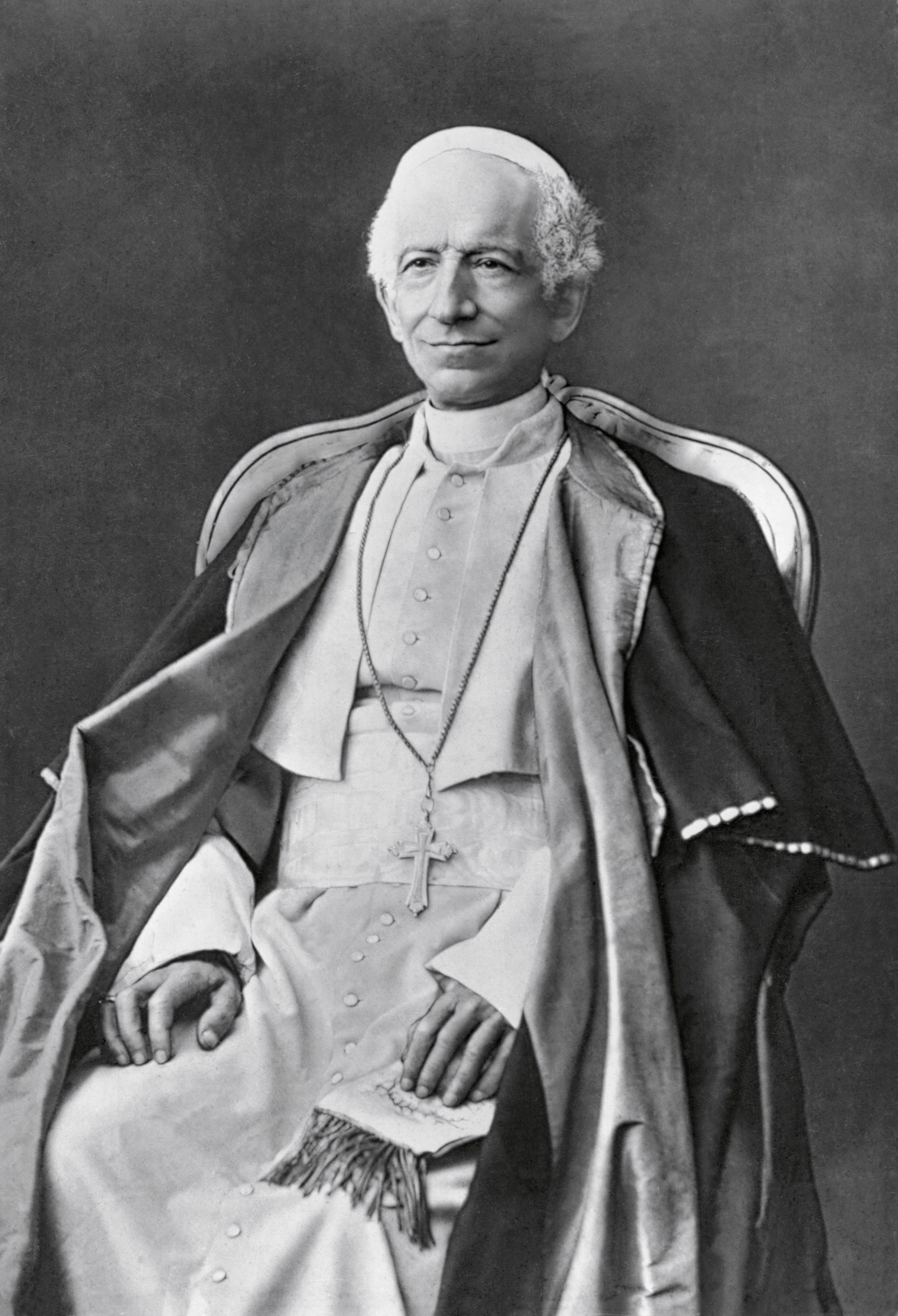
“When England Returns To Walsingham, Our Lady Will Return To England.” — Pope Leo XIII.


Pope Leo XIII.
Date: 11 April 1878.
Photographer: Unknown.
Source: 
Observador. pt: Info Pic.
Getty Images: Info 1. Info 2.
Author:
(fl. circa 1868 – 1969).
(Wikimedia Commons)


The following Text is from Wikipedia - the free encyclopædia,
unless stated otherwise.

Pope Leo XIII (Italian: Leone XIII; born Gioacchino Vincenzo Raffaele Luigi Pecci;[a] 2 March 1810 – 20 July 1903) was head of the Catholic Church from 1878 until his death in 1903. 

He had the fourth-longest reign of any Pope, behind those of Saint Peter, Blessed Pius IX (his predecessor), and Saint John Paul II.

Rev. Fr. Timothy Finigan Gives A Short Talk On Fatima, And The Rosary, And Saint Joseph. Plus, The Complete Gregorian Chant Rosary.


Fr. Timothy Finigan
gives a short talk, dated 13 May 2020, on
Fatima, The Rosary, and Saint Joseph.
Available on YouTube


Complete Gregorian Chant Rosary.
Available on YouTube

“Songs My Mother Taught Me”. Composer: Antonin Dvořák.


“Songs My Mother Taught Me”.
Composer: Antonin Dvořák.
Available On YouTube

Fontgombault Sermon For The Ascension Of The Lord, 2024: “Each Man Is Called To Kindle His Own Lamp.”


Fontgombault Abbey, France.
Illustration: FONTGOMBAULT ABBEY


Text from RORATE CÆLI

Sermon of the Right Reverend Dom Jean Pateau.
Father Abbot of Our Lady of Fontgombault Abbey.
9 May 2024.

“Et eritis mihi testes”.
You shall be witnesses unto Me.
(Acts 1:8)


Dear Brothers and Sisters,
My dearly beloved Sons,

After encountering Christ risen and victorious over death during the first apparitions to the disciples, The Church invited us a few weeks ago to ponder on the figure of The Good Shepherd. (Cf. Jn 10.) The Good Shepherd is He who leads His sheep so that “they may have life, and have it abundantly.” (Jn 10:10.) He is for them the door: If any one enters by Me, he will be saved, and will go in and go out, and find pasture. (v. 9.)

Unlike the hireling, The Good Shepherd gives his life for His sheep. He knows His own sheep and His own sheep know Him. As the parable of the lost sheep attests, He doesn’t hesitate to leave the fold to go after the one which is lost (Lk 15:3-7). The vocation of The Good Shepherd is expressed by the words he utters: “I am the way, and the truth, and the life.” (Jn 14:6.)

On this Ascension morning, as we have just snuffed out the Paschal candle that symbolised the victory of light over darkness, and the presence of the glorious Christ among His own, shouldn’t sorrow fill men’s hearts, our own hearts ? These forty days during which Christ had presented Himself alive after His passion, giving many proofs of His resurrection, and speaking of the kingdom of God, had been such a joy for the disciples !


How then can we understand that, according to Saint Luke, these same disciples after The Lord had Blessed them while He was carried up into Heaven, “returned to Jerusalem with great joy, continually in the temple Blessing God” (Lk 24:52-53) ? What a contrast with Good Friday evening, when Christ, up on a Cross, had seemed to forsake His disciples, who, for that matter, had already been scattered, or rather had Himself first been forsaken by them. Joy was missing.

Assuredly, today’s joy does not stem from the liberation of the Master’s oppressive presence. No indeed, for the disciples fully know that His presence is a loving presence. Besides, they remember His first words on Easter morning, “Pax vobis, Peace be unto you.” (Lk 20:19) Maybe we should consider that this so unexpected joy stems from the mission the disciples have just received:

Go into all the World and preach the gospel to the whole creation. He who believes and is baptised will be saved; but he who refuses to believe will be condemned. (Mk 16:15-16.)


Maybe also from the gift of charisms, and the prospect of conversions due to the convincing power of miracles:

And these signs will accompany those who believe: In My name they will cast out demons; they will speak in new tongues; they will pick up serpents, and if they drink any deadly thing, it will not hurt them; they will lay their hands on the sick, and they will recover. (v. 17-18)

However, we should not forget that these verses have been preceded by a particularly severe reproach:


He upbraided them for their unbelief and hardness of heart, because they had not believed those who saw Him after He had risen. (v. 14)

It was precisely Faith that was lacking on Good Friday evening. Basically, the disciples’ joy is probably due mostly to a renewal of their Faith. Wouldn’t that be for us an indication, an invitation ? We, too, are called to the joy of Faith. The apostles are waiting for a promise to be accomplished, the Father’s promise, they are waiting for The Spirit Paraclete to be sent:

But when the Counsellor comes, Whom I shall send to you from The Father, even The Spirit of Truth, Who proceeds from The Father, He will bear witness to Me; and you also are witnesses, because you have been with Me from the beginning. (Jn 15:26-27)


The snuffed-out Paschal candle is therefore not so much a witness to the disappearance of a visible Christ, as the announcement of a new light, shed into the hearts of those who accept to receive it and become its witnesses before the World. In His death and resurrection, Christ begets billions of human beings in whom He now dwells, billions of small lights, more or less flickering, more or less luminous to enlighten the World.

To these small lights, each man is called to kindle his own lamp, or to rekindle it if perchance it has been snuffed out. The Lord had foretold it:

And I have other sheep, that are not of this fold; I must bring them also, and they will heed My voice. So there shall be one flock, one Shepherd. (Jn 10:16)


On this Ascension day, as we listen to the call to mission the Good Shepherd addresses to the disciples, we remember our duty to Pray for Priestly and Religious vocations. Assuredly, each man, each woman, is called to be a witness of Christ; but the most beautiful of all testimonies should be that of the men and women who have forsaken everything so as to consecrate themselves to Christ by becoming either a Priest, or a Religious, or a Nun.

The testimony of faithfulness to a radical and irrevocable gift of their own life, either in an apostolic life or in the silence of the cloister, is self-sufficient. The holy Pope Paul VI affirmed: Contemporary man listens more willingly to witnesses than to masters, or rather, if he listens to masters, that is because they are themselves witnesses. (Audience, October 2, 1974)

Holiness is also a way to lead men and women to an encounter with Christ’s true face. “Go into all the world . . . Be My witnesses.” These words have given rise to so many holy figures, so many messengers of the risen Christ: Saint Anthony, fleeing to the desert; Saint Francis, the poor of Assisi; Saint Francis de Sales, so meek. Among these figures, how could we fail to mention Mary, the Mother of Jesus, the Mother of Priests and Religious, the Mother of all the friends of Jesus, and of all men, whom she wants to lead to her Son ?

With her and a few other women, the apostles are going to gather in Prayer in the Upper Room, waiting for the gift of The Spirit. We too, let us prepare to receive this gift by pondering on the Sequence or the Hymn of Pentecost. He, Whom we received in abundance on the day of our confirmation, wishes to keep working in us. He is Fons vivus, Ignis, Caritas: “Live Fount, Fire, Love.” From Him we receive life, and we receive life in abundance. May we remain witnesses to this life.

Veni, Sancte Spiritus !

Amen, Alleluia.

The Feast Day Of Our Lady Of Fatima. 13 May.


Our Lady of Fatima.
“Putting up with any sacrifices, that are asked of us in our day-to-day lives, becomes a slow Martyrdom, which purifies us and raises us up to the level of the Supernatural, through the encounter of our Soul with God, in the atmosphere of the presence of The Most Holy Trinity within us.
We have here an incomparable Spiritual Richness !!!”
Words of The Servant of God, Sister Lucia. 1997.
Illustration: OFFERIMUS TIBI DOMINE


This Article is taken from, and can be read in full at,

Wednesday, 13 May 2020, is
The Feast of Our Lady of Fatima.

Her words, quoted above, might be particularly appropriate for these days, if we are finding things difficult, to be away from loved ones, to be struggling at home, to be in financial difficulties and, of course, to be unable to attend
The Holy Sacrifice of The Mass.

Whatever befalls us in life can be offered to Almighty God 
for His Grace, to transform it by bringing forth good
out of adversity, or by raising up
the merely human to the Supernatural.


The Daily Offering.

O, Jesus, through The Immaculate Heart of Mary, 
I offer you all the Prayers, Works, Sufferings and Joys
of this day, in union with The Holy Sacrifice of The Mass
offered throughout the World.

I offer them for all the intentions of
Your Most Sacred Heart:
For the Salvation of Souls;
Reparation for sin;
And the Reunion of all Christians.

Amen.

Saint Robert Bellarmine. Bishop. Confessor. Doctor Of The Church. Feast Day 13 May. White Vestments.


Text is taken from The Saint Andrew Daily Missal,
unless otherwise stated.

Saint Robert Bellarmine.
   Bishop,
   Confessor,
   Doctor of The Church.
   Feast Day 13 May.

Double.

White Vestments.


Saint Robert Bellarmine.
Jesuit, and Doctor of The Church
(4 October 1542 - 17 September 1621).
Beatified 13 May 1923.
Canonised 29 June 1930
by Pope Pius XI.
Date: 16th-Century.
Source: istitutoaveta.it
Author: Anonymous.
(Wikimedia Commons)

Born at Montepulciano, Italy, died in Rome. Proclaimed Doctor of The Church on 15 August 1931.

Successively, Professor of Theology and Preacher at Louvain (1569 - 1576), Director of the Course of Controversy in Rome, where Saint Aloysius Gonzaga was his Penitent, Provincial of The Jesuits at Naples, sent by Pope Sixtus V on a Diplomatic Mission to France, Bellarmine was raised to the Cardinalate in spite of his unwillingness in 1599.

Pope Clement VIII alleged as motive for this promotion that his (Editor: Bellarmine's) equal in learning was not at that time to be found in The Church.


Burbank, California, United States of America.
Photo: April 2008.
Source: Own work: 
Transferred from en.wikipedia
Author: Cbl62
Attribution: Cbl62 at en.wikipedia
(Wikimedia Commons)

Apart from three years he spent in Capua as Archbishop, he passed his life in Rome, where he rendered signal services to Pope Clement VIII, Pope Paul V, and Pope Gregory XV.

By his controversial books, he dealt formidable blows to Protestantism, while, by his Catechism, translated into forty languages, he spread the knowledge of Christian Doctrine in all Countries of the World.

As a Religious, he shone by his Angelic purity, humility, and obedience, and, as Bishop, he was a model of watchful care and Charity to the Poor.

Towards the end of his life, he obtained leave of the Pope to retire to the Novitiate of Saint Andrew, the cradle of his Religious Life, where he prepared for a happy and holy death.

Mass: In médio. From the Common of Doctors.

Vigil Of The Ascension. White Vestments.


Text from The Saint Andrew Daily Missal,
unless otherwise stated.

Vigil of The Ascension.

White Vestments.


The Ascension.
Artist: Benvenuto Tisi (1481–1559).
Date: 1510-1520.
Source/Photographer: Web Gallery of Art
(Wikimedia Commons)

Apart from The Rogations, The Church is filled with joy, and, assuming White Vestments, is preparing for the Solemn Feast of The Ascension by a special kind of Vigil, when the Gloria in Excelsis is sung. No Fasting or Abstinence is observed.

The Mass abounds in outbursts of joy because The Saviour of mankind is about to enter triumphantly in Heaven into the Glory of The Father after delivering us from Satan and sin.

Mass: Fifth Sunday After Easter.
Second Collect: Praesta, quæsumus.
Third Collect: Concéde nos.

12 May, 2026

How To Assist At Mass. The Holy Sacrifice Is Offered To The Holy Trinity.


Text from The Saint Andrew Daily Missal,
unless otherwise stated.

First of all, we must never forget that The Mass is a Sacrifice, an act, by which The Church gives to Almighty God, officially and in the name of all, Worship of the highest kind, Adoration, or Latria (Editor: Supreme Worship allowed to God, alone), which is due to Him alone, in virtue of the supreme excellence of His Divine Being, from which everything comes and to which everything must return.

Therefore, The Mass is offered only to The Three Persons of The Blessed Trinity.

What the Priest offers to God, as an acknowledgement of His Sovereign Dominion over all creatures, is none other than Our Lord Jesus Christ, Who, by His Sacrifice on The Cross, has rendered to His Father an infinite Act of Worship, consisting of Adoration, Thanksgiving, Expiation, and Impetration (Editor: The action of requesting something fervently).


The Sacrifice of The Mass, by placing on the Altar The Victim of Calvary, enables us, through Him, to Adore God in a suitable manner, to thank Him worthily for all His favours, to render Him full satisfaction by the offering of The Blood of Jesus, and to address to Him requests which are always heard because they are made in His name, Who, by the very act of showing His Glorious Wounds to His Father, intercedes unceasingly for us in Heaven and in The Eucharist on Earth.

Moreover, since all the Mysteries of Our Saviour's life have helped, in union with Calvary, to bring about our Salvation, The Church Commemorates them in The Holy Sacrifice of The Mass by the different Feasts of The Temporal Cycle or The Cycle of Christ.

At Christmas, she offers to God The Divine Child of The Manger, with all that stage in Our Lord's life that has specially contributed to The Father's Glory; and, by that means, ensures to us the application, quite special, also, of the Graces which Christ merited for us, and which will enable us to practise each year, more and more, the Virtues of which The Son of God and Mary then gave us an example.


The Holy Sacrifice is offered in honour of The Saints.

But The Mass is offered, also, in honour of The Saints, as The Sanctoral Cycle shows. In this way, is emphasised the fact, that it is to the Sacrifice of Calvary and to The Eucharist, that The Saints owe the Graces which God gave them in such abundance. And The Saints, themselves, are honoured when the work of The Most High is glorified in them.

We offer to The Saints, also, a fitting homage when we unite their memory with Our Lord's at the Altar. This is done on the Anniversary of their death and every day in The Canon of The Mass. As Members of The Mystical Body of Christ, it is right to associate them with The Sacrifice of their Head, since, by their sufferings, and often by their Martyrdom, they have mingled their blood with that of this Divine Victim.

Moreover, The Church encloses The Relics of The Saints, especially those of The Martyrs, in the Altar-Stone at the very spot where the Priest places The Sacred Host. "It is the whole City of The Redeemed," says Saint Augustine, "the assembly and company of The Saints, which is the universal sacrifice and which is offered to God by The High Priest, Who offers Himself for us in His Passion."
 

We render to The Saints the greatest honour we can give them when we offer to God, in their name, The Blood of Jesus to Adore The Most High and to thank Him for His favours to them. The Saints, full of zeal for The Glory of The Holy Trinity, are beholden to us if we honour God in union with their intention, for this increases their joy.

The efficacy of their merits in the past, and their Prayers in the present, is, in a special way, increased, when these are offered to God closely united with the Merits and Prayers of Christ Jesus, The Universal Mediator, and this happens especially on their Feast Day, when Holy Mass is Celebrated in their honour.

"Most humbly we Pray," says The Church in The Collect for The Feast of All Saints, "that, since so great is the number of Thine Elect pleading for us, we may partake, in all their fulness, of Thy abounding mercies."

Most willingly does God accept the offering of The Blood of Christ, made through The Saints as intermediaries.


How The Faithful can take an active part in this Sacrifice.

Assisting at Mass, we should do four things:

1. Reconstruct the historic setting in which took place the event in Our Lord's life, or in that of one of His Saints, which is being Commemorated on the appointed day. In doing this, much help may be gained from The Mass of The Catechumens with its different features: The Vestments; The Chant; The Introit, Epistle, Gospel, etc.


2. Offer to God, for His greater glory, The Mystery of Our Redeemer's Life which is being Commemorated, the Acts of Virtue which have been practised by the Saint whose Feast it is. This is done in The Canon of The Mass; it is not fitting to Communicate (Editor: To go to Communion] before having made this offering which appeases The Most High and brings us Divine Grace.


3. Ask of God (this is done in the Pater Noster) and receive from Him, by the Merits and Intercession of Our Lord and His Saints, the Graces which they, themselves, received when they were living on Earth. (This is the fruit of the Communion and Postcommunion.)


4. To these three ways of Interior or Spiritual Participation, which can be practised at every Mass, we should, as far as circumstances allow, add Exterior or Material Participation, which may consist:

In reading Liturgical Prayers with the Priest;

In singing Congregational and Gregorian Chant at High Mass;

In responding at Low Mass, and best of all,

In receiving Holy Communion with the Priest during Mass.


In this way, we shall draw plentiful fresh draughts of the True Christian Spirit at its primary source, as Pope Saint Pius X wished.

Certain Texts of The Mass are reserved to the Priest, and should never be said aloud by The Faithful: We can still make these parts our own, not by a mechanical repetition, but by reverent and serious reflection, corresponding to the thoughts expressed by these Prayers.

Other parts of The Mass were originally, and are still meant to be, said by the people. They are of two kinds: Those that are to be Chanted by The Congregation at High Mass, and those that are responded by the Ministers, or by the Server at Low Mass, on our behalf.


Before Holy Communion, we should say not only the Confiteor, with the Server, but the Domine non dignus, which the Priest says at that moment on our behalf, may also be said three times with him.

In The Ordinary of The Mass, all sentences that may be said by The Faithful are printed in heavier type (Editor: Bold Type).

This assistance at The Holy Sacrifice is the ideal preparation for Holy Communion, since it is the same that The Church imposes on The Pope, the Bishops, and all Priests, whenever they Celebrate Mass.


It develops in the Soul those sentiments of contrition (from the Introit to the Collects), of Faith (from the Collects to the Credo), of hope (at The Canon of The Mass), of love (at the Communion), and of gratitude (from the Ablutions to the end of Mass), which are indispensable if The Eucharist is to be received with fruit.

By means of this preparation, the highest Act of Participation in The Mass is Holy Communion. It obtains all its fruits, because it is one of the most perfect applications of the conditions required by the Decree of the Saintly Pope Pius X, when he said: "A most abundant attainment of the effects of Holy Communion is, by a careful preparation and a thanksgiving, proper to the reception of this Divine Sacrament".


Monstrance.
Photo: 2004-10-18 (original upload date).
Source: Own work (zelf gemaakt).
Originally from nl.wikipedia; description page is/was here.
Author: Original uploader was Broederhugo at nl.wikipedia.
(Wikimedia Commons)

Related Posts Plugin for WordPress, Blogger...